

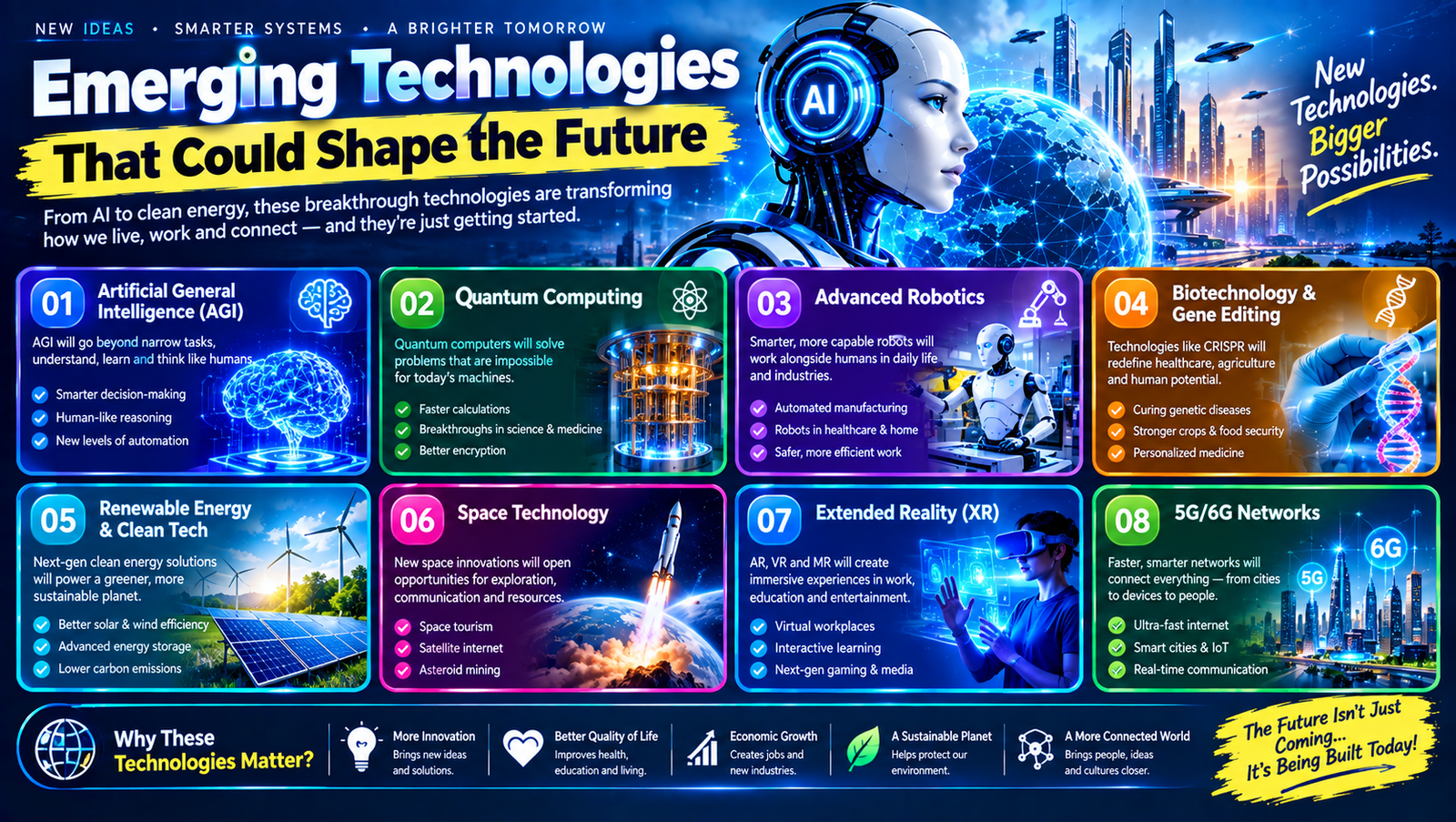
Meta Title: Emerging Technologies That Could Shape the Future | 2026 Guide
Meta Description: Explore emerging technologies that could shape the future, including AI, robotics, quantum computing, world models, biotechnology, advanced energy and spatial computing.
Focus Keyword: emerging technologies that could shape the future
Secondary Keywords: emerging technologies 2026, future technology, new technology trends, future of technology, advanced technology, next generation technology, technology of the future
Suggested URL Slug: /emerging-technologies-that-could-shape-the-future/
Introduction
Technology is changing faster than ever.
Artificial intelligence is becoming more capable, robots are becoming more intelligent, quantum computing is moving toward practical applications, biotechnology is becoming increasingly programmable, and new energy technologies are being developed to support a more demanding digital world.
But the future of technology will probably not be created by one invention alone.
Increasingly, different technologies are being combined.
Artificial intelligence can help discover new materials. Robotics can use AI to interact with the physical world. Quantum computing can be explored for complex scientific problems. Biotechnology can combine biology with advanced computing. New energy systems can support the growing electricity requirements of data centres and other technologies.
The World Economic Forum’s 2026 technology-convergence research identifies eight major domains that are increasingly combining: AI, omni computing, engineering biology, robotics, advanced materials, spatial intelligence, quantum technologies and next-generation energy.
Its 2026 emerging-technology report also identifies technologies approaching wider real-world impact across energy, materials, healthcare and computing.
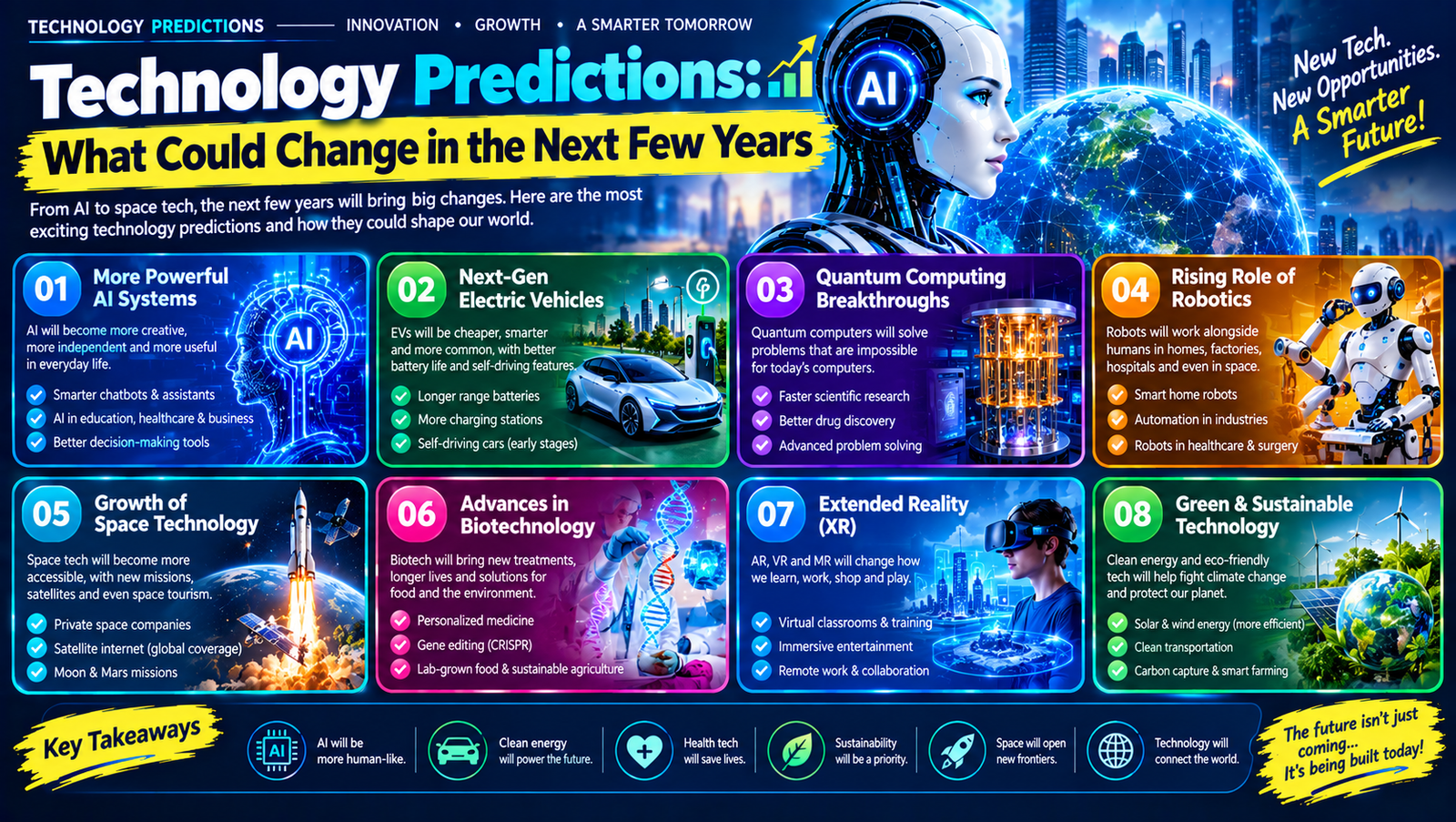
This article explores the emerging technologies that could influence the coming years and explains why they matter.
What Are Emerging Technologies?
Emerging technologies are technologies that are still developing but show signs of becoming increasingly useful, commercially important or socially significant.
They are different from technologies that are already fully mature.
An emerging technology may be:
- Still in research
- Entering commercial deployment
- Becoming cheaper
- Improving rapidly
- Moving from laboratories into real-world applications
Importantly, emerging does not mean guaranteed.
Some technologies will become mainstream. Others may remain specialized, take longer than expected or be replaced by better solutions.
That is why it is useful to look at emerging technologies as areas of development rather than certain predictions.
1. Artificial Intelligence and AI Agents
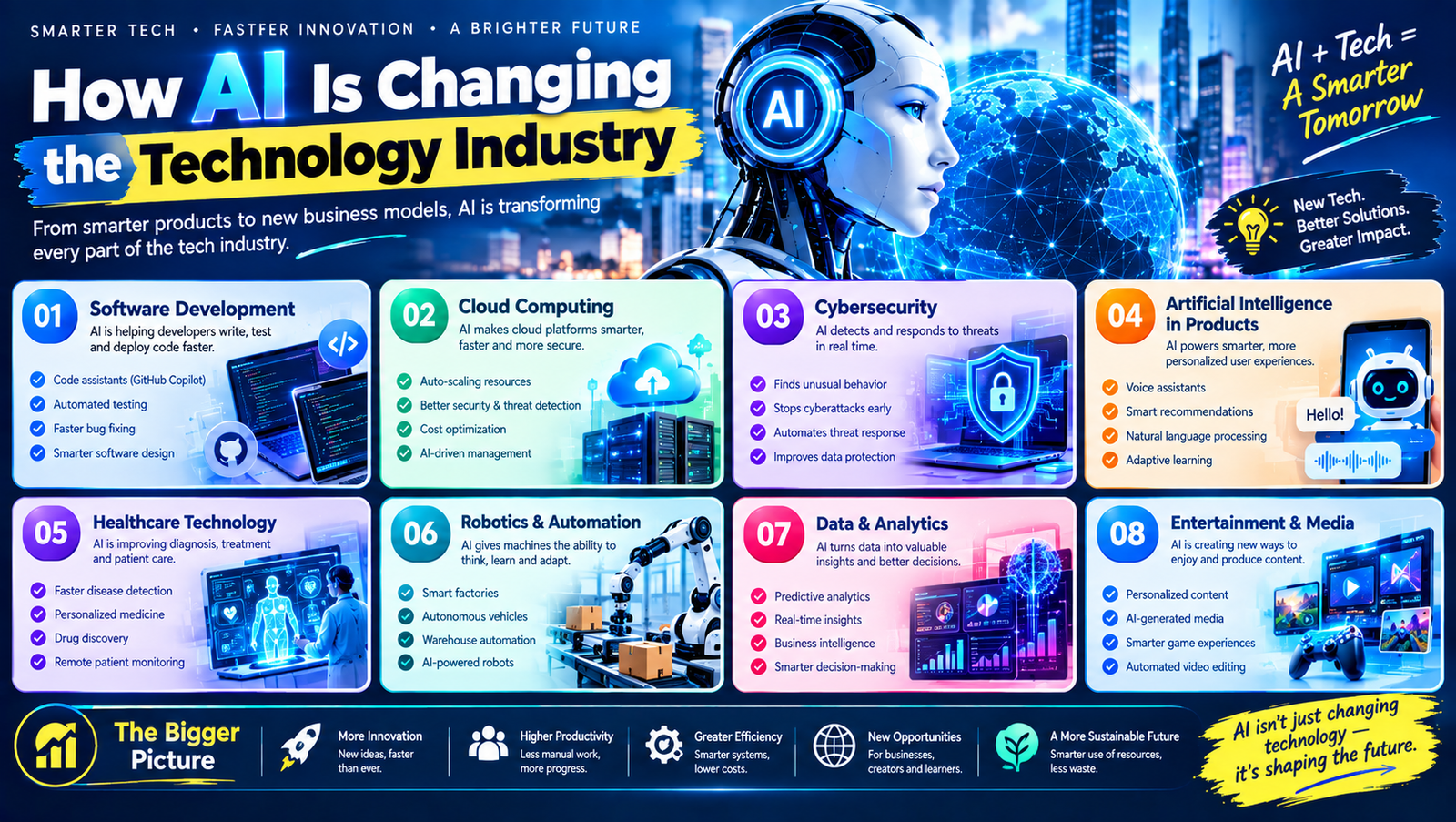
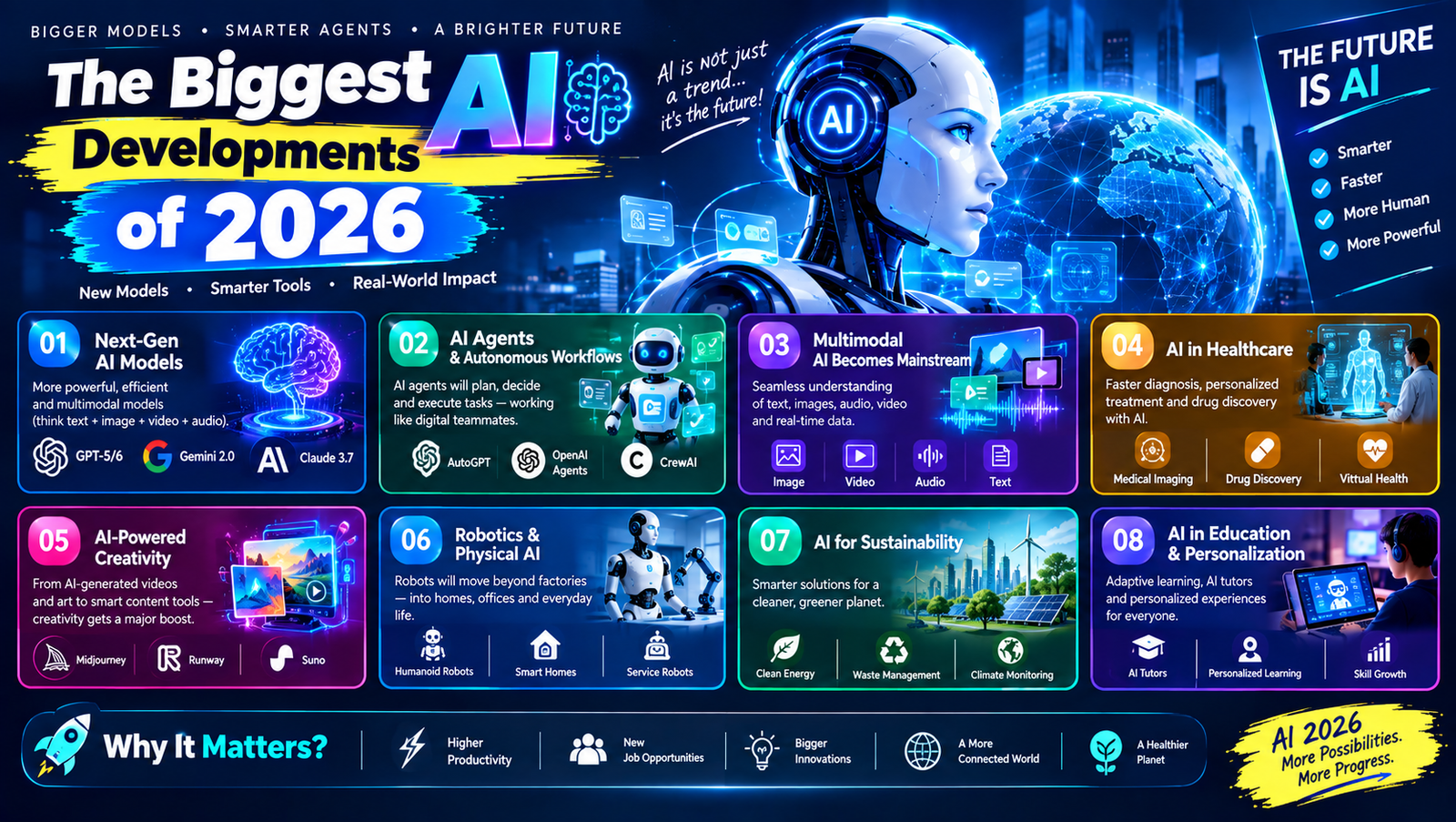
Artificial intelligence is likely to remain one of the most influential technology areas of the coming years.
The major change is that AI is moving beyond simple content generation.
Modern AI systems are increasingly being developed to:
- Reason about complex problems
- Work with multiple types of information
- Use external tools
- Write and analyze code
- Process documents
- Complete multi-step tasks
- Interact with software
AI agents are an important part of this transition.
Instead of simply answering:
“How do I complete this task?”
an AI agent may be designed to actually perform parts of the task.
For example, an AI agent could potentially:
- Research information
- Organize the results
- Analyze the data
- Prepare a report
- Send the result to another system
This could change office work, software development, customer support and business automation.
The World Economic Forum’s 2026 Technology Pioneers research also highlights the emergence of infrastructure designed to support autonomous AI systems at scale.
2. World Models
One particularly interesting emerging technology is the world model.
Traditional AI models are often designed to recognize patterns or generate information.
World models aim to develop an internal understanding of how environments work.
They can learn from combinations of:
- Video
- Images
- Text
- Sensors
- Spatial information
- Physical interactions
The goal is to help AI systems predict what could happen in an environment.
The World Economic Forum’s 2026 emerging-technologies report describes world models as AI systems designed to understand and predict physical environments rather than simply describe them.
Why World Models Matter
World models could be particularly useful for:
- Robotics
- Autonomous vehicles
- Industrial automation
- Simulation
- Climate modelling
- Virtual environments
For example, a robot needs more than the ability to identify a chair.
It needs to understand:
- Where the chair is
- How it can move around it
- What happens if something blocks its path
- How objects behave when touched
- How people may move nearby
World models could help AI reason about these situations.
3. Advanced Robotics and Physical AI
Robotics is moving toward a new generation of intelligent machines.
Traditional robots often perform highly structured tasks.
Emerging AI-powered robots are being designed to operate in more complex environments.
This area is sometimes described as physical AI.
Physical AI combines:
- Artificial intelligence
- Computer vision
- Sensors
- Robotics
- Simulation
- Planning
- Real-world control
The World Economic Forum reports that physical AI and robotics are becoming an important frontier for investment and innovation in 2026.
Potential Applications
Future AI-powered robots could be used in:
- Manufacturing
- Warehousing
- Agriculture
- Healthcare
- Construction
- Logistics
- Inspection
- Disaster response
Humanoid robots are receiving particular attention because their body structure can potentially allow them to operate in environments designed for humans.
However, reliable general-purpose robotics remains a difficult engineering challenge.
4. Quantum Computing
Quantum computing is another technology that could have a major long-term impact.
Traditional computers use bits represented as 0 or 1.
Quantum computers use quantum systems called qubits, which behave according to the laws of quantum mechanics.
Quantum computing is not simply a faster replacement for normal computers.
Instead, it is being developed for specific classes of problems where quantum approaches could offer advantages.
Potential applications include:
- Drug discovery
- Chemistry
- Materials science
- Optimization
- Cryptography
- Scientific simulation
In 2026, NVIDIA launched its Ising family of open AI models for quantum processor calibration and error-correction research, showing how AI and quantum computing are increasingly being developed together.
Why Quantum Computing Matters
One important possibility is better simulation of complex molecules.
That could eventually help researchers investigate materials and medicines that are difficult to model using classical computing alone.
However, useful large-scale quantum computing still faces significant technical challenges.
Therefore, quantum computing should be viewed as a developing technology rather than a finished replacement for today’s computers.
5. Post-Quantum Cryptography
Quantum computing creates another technology opportunity: post-quantum security.
Modern digital systems depend heavily on encryption.
If sufficiently powerful quantum computers become available in the future, some existing cryptographic systems could become vulnerable.
Post-quantum cryptography aims to create encryption methods that remain secure against quantum and classical attacks.
The World Economic Forum’s 2026 report identifies lattice-based cryptography as an emerging technology designed to protect information against future quantum threats.
This matters because organizations cannot necessarily wait until powerful quantum computers arrive before upgrading security.
Large systems may require years to migrate.
Where Could It Be Used?
Post-quantum cryptography can matter for:
- Banking
- Government systems
- Cloud computing
- Messaging
- Healthcare
- Enterprise networks
- Critical infrastructure
Cybersecurity is therefore becoming closely connected with quantum computing.
6. Spatial Computing
Spatial computing combines digital information with physical space.
It can involve:
- Augmented reality
- Virtual reality
- Mixed reality
- 3D environments
- Spatial interfaces
- Computer vision
Instead of interacting with a computer only through a traditional screen, users can interact with digital objects within a spatial environment.
Potential Applications
Spatial computing could influence:
Education
Students could explore 3D environments.
Healthcare
Medical professionals could visualize complex anatomical information.
Engineering
Designers could inspect 3D models before physical production.
Training
Workers could practice procedures in simulated environments.
Entertainment
Games and digital experiences can become more immersive.
As spatial intelligence improves, AI may also become better at understanding the relationship between objects and physical spaces.
7. Engineering Biology
Biotechnology is increasingly becoming programmable.
Scientists can use advanced tools to manipulate biological systems and design new biological processes.
This field can involve:
- Synthetic biology
- Genetic engineering
- Bio-manufacturing
- Computational biology
- Engineered microbes
The World Economic Forum identifies engineering biology as one of the major technology domains participating in the broader convergence of frontier technologies.
Why Engineering Biology Matters
Biological systems could potentially be used to produce:
- Medicines
- Food ingredients
- Chemicals
- Materials
- Industrial products
Instead of relying entirely on traditional chemical or agricultural production, some products could increasingly be created using biological processes.
8. Personalized Medicine and mRNA Technologies
Healthcare could also be transformed by more personalized technologies.
One emerging area is personalized mRNA cancer vaccines.
These approaches are designed around mutations found in an individual patient’s tumor.
The World Economic Forum’s 2026 emerging-technology report identifies personalized mRNA cancer vaccines among technologies approaching broader clinical development, while noting that cost, manufacturing capacity and access remain important considerations.
The broader trend is toward medicine that is increasingly designed around:
- Individual patients
- Specific diseases
- Genetic information
- Tumor characteristics
- Personal biological data
This represents a shift away from treating every patient in exactly the same way.
9. AI-Powered Drug Discovery
Drug discovery can take years and requires significant resources.
AI is increasingly being used to help researchers analyze biological information and predict how molecules may behave.
AI can assist with:
- Molecular analysis
- Protein research
- Drug candidate screening
- Biological prediction
- Data analysis
Quantum computing is also being explored alongside AI for drug discovery.
The World Economic Forum’s 2026 report identifies quantum simulation for drug discovery as an emerging area, with researchers exploring how quantum approaches could improve molecular simulations.
The potential benefit is not simply faster computing.
Better modelling could help researchers investigate possibilities earlier and reduce some inefficient experimental work.
10. Direct Lithium Extraction
Lithium is an important material for many battery technologies.
Traditional lithium extraction can require significant land, water and time.
Direct lithium extraction, or DLE, is an emerging approach designed to extract lithium from brines more directly.
The World Economic Forum’s 2026 report notes that DLE processes can recover lithium from brine in hours rather than the months associated with conventional evaporation approaches and may reduce some land and water requirements.
Why This Matters
As demand for batteries grows, the world needs reliable supplies of critical minerals.
Technologies that improve extraction could influence:
- Electric vehicles
- Energy storage
- Consumer electronics
- Renewable energy systems
- Battery manufacturing
DLE is still developing, and performance depends on the specific resource and technology used.
11. Next-Generation Energy Systems
The growth of AI and data centres is increasing the importance of energy.
Data centres require electricity for:
- Computing
- Cooling
- Networking
- Storage
At the same time, electric vehicles, heat pumps and other technologies are increasing electricity demand.
This creates interest in new energy technologies.
Potential areas include:
- Advanced batteries
- Geothermal energy
- Fusion
- Grid optimization
- Distributed energy
- Energy storage
- Space-based energy concepts
The World Economic Forum’s 2026 Technology Pioneers research highlights the growing convergence between energy and computing, noting that rising AI demand is increasing pressure on power systems.
12. Everything-to-Grid Energy
One particularly interesting concept is everything-to-grid energy.
Instead of treating devices only as electricity consumers, connected systems can potentially become flexible energy resources.
Examples include:
- Electric vehicles
- Home batteries
- Industrial batteries
- Data-centre storage
- Buildings
When electricity demand is high, stored electricity could potentially be sent back to the grid.
The World Economic Forum lists everything-to-grid energy as one of its Top 10 Emerging Technologies of 2026.
A Simple Example
Imagine thousands of electric vehicles connected to a smart grid.
When demand is low:
Vehicles charge.
When demand increases:
Some stored electricity can potentially support the grid.
This could make existing energy infrastructure more flexible.
13. Passive Radiative Cooling
Cooling buildings and electronic systems consumes energy.
Passive radiative cooling offers a different approach.
Special materials can be designed to reflect sunlight and release heat toward the atmosphere and outer space.
The World Economic Forum identifies passive radiative cooling materials as one of its emerging technologies for 2026.
Potential Uses
This technology could potentially be applied to:
- Buildings
- Data centres
- Warehouses
- Solar equipment
- Industrial systems
- Refrigeration-related applications
The interesting aspect is that cooling can occur without requiring conventional electricity-driven refrigeration for the cooling effect itself.
14. Advanced Materials
Materials science is another field that could shape future technology.
Researchers are developing materials with improved:
- Strength
- Conductivity
- Flexibility
- Durability
- Thermal performance
- Energy efficiency
AI can also accelerate material discovery by helping researchers simulate and evaluate large numbers of possible materials.
This creates an important combination:
AI + advanced computing + materials science
Instead of testing every possibility physically, researchers can use simulations to narrow down promising candidates before laboratory testing.
The World Economic Forum identifies advanced materials as one of the technology domains increasingly converging with AI, robotics, biology and energy.
15. Edge AI and Distributed Computing
AI does not always need to run in a distant cloud.
Edge computing moves processing closer to where data is generated.
This can be useful for:
- Smartphones
- Vehicles
- Cameras
- Industrial equipment
- Robots
- IoT devices
The benefits can include:
- Lower latency
- Faster responses
- Reduced bandwidth requirements
- Greater local control
- Potential privacy benefits
For example, a robot in a factory may need to make a decision immediately rather than sending every sensor reading to a remote data centre.
Edge AI can therefore become particularly important for physical AI.
16. Advanced Space Technologies
Space technology is also evolving beyond traditional launch systems.
Emerging areas include:
- Satellite servicing
- Lunar infrastructure
- Space-based energy
- Earth observation
- In-orbit manufacturing
- Lunar resource research
The World Economic Forum’s 2026 Technology Pioneers cohort includes companies working on areas such as lunar resource extraction and space-based energy.
AI is also useful in space because autonomous systems need to make decisions in environments where communication with Earth can be delayed.
17. Smart Manufacturing
Manufacturing is becoming increasingly intelligent.
Future factories may combine:
- AI
- Robotics
- Computer vision
- Digital twins
- Sensors
- Edge computing
- Advanced materials
A production line could potentially monitor itself continuously.
AI could identify unusual patterns.
Robots could adjust their actions.
Digital systems could simulate production changes before physical implementation.
This is an example of technology convergence: several technologies working together rather than operating independently.
The World Economic Forum’s 2026 convergence report emphasizes that combining technology domains can create capabilities that individual technologies may not provide alone.
18. Digital Twins and Simulation
A digital twin is a digital representation of a physical object, machine, building or process.
It can be used to monitor and simulate real-world systems.
For example, a factory could create a digital model of its production process.
Before changing the physical factory, engineers could simulate:
- Equipment changes
- Production schedules
- Energy usage
- Maintenance scenarios
AI can make digital twins more powerful by helping analyze large quantities of sensor data and predict possible outcomes.
This could be useful for:
- Manufacturing
- Smart cities
- Energy systems
- Transportation
- Buildings
- Industrial infrastructure
19. Autonomous Transportation
Transportation is another field where emerging technologies are converging.
Autonomous systems combine:
- AI
- Computer vision
- Sensors
- Mapping
- Robotics
- Edge computing
- High-performance hardware
Self-driving vehicles need to understand their surroundings and make decisions in real time.
Future transportation systems could potentially include autonomous:
- Cars
- Delivery vehicles
- Warehouse vehicles
- Drones
- Industrial machines
However, safety, regulation and reliability remain major challenges.
20. The Convergence of AI and Other Technologies
Perhaps the most important emerging trend is not one specific technology.
It is technology convergence.
AI can combine with:
AI + Robotics
Creates more capable physical machines.
AI + Biology
Accelerates biological research.
AI + Quantum Computing
Explores new approaches to complex computational problems.
AI + Advanced Materials
Helps discover new materials.
AI + Energy
Optimizes electricity systems and supports energy management.
AI + Spatial Computing
Creates systems that understand physical environments.
The World Economic Forum’s 2026 research specifically argues that technology combinations can create new capabilities that individual technologies may not deliver alone.
Which Emerging Technologies Could Affect Everyday Life?
Not every emerging technology will immediately reach consumers.
But several areas could eventually become visible in everyday life.
| Technology | Possible Everyday Impact |
|---|---|
| AI Agents | Digital assistants performing tasks |
| Robotics | Household and workplace automation |
| Spatial Computing | More immersive digital interfaces |
| Edge AI | Faster AI on local devices |
| Advanced Batteries | Better energy storage |
| Smart Grids | More flexible electricity systems |
| Autonomous Transport | New transportation experiences |
| Personalized Medicine | More targeted treatments |
| AI Search | Different ways to find information |
| Smart Devices | More context-aware products |
The timing will vary.
Some technologies may become widespread relatively soon, while others could take many years.
Challenges Facing Emerging Technologies
Emerging technology does not automatically become successful.
Several challenges can slow adoption.
High Costs
New technologies can initially be expensive.
Infrastructure
A technology may require new networks, factories or energy systems.
Regulation
Governments may need new rules for emerging applications.
Safety
Robotics, healthcare and autonomous systems require extensive testing.
Privacy
AI and connected devices can process sensitive information.
Cybersecurity
More connected systems create more potential attack surfaces.
Skills
Businesses need people who understand new technologies.
Public Trust
People need to understand how new systems work and how risks are managed.
These challenges are why technological progress often takes longer than initial headlines suggest.
How Businesses Can Prepare for Emerging Technology
Businesses do not need to adopt every new technology.
A better approach is to identify technologies that connect to real business problems.
Step 1: Identify Your Biggest Problems
Ask:
- Where are we losing time?
- Where are costs increasing?
- Where are customers experiencing friction?
- Which processes are repetitive?
Step 2: Watch Relevant Technologies
A manufacturing company may focus on robotics and AI.
A healthcare company may focus on biotechnology.
A software company may focus on AI agents and cybersecurity.
Step 3: Run Small Experiments
Start with low-risk projects.
Step 4: Measure Results
Compare:
- Cost
- Time
- Quality
- Reliability
- Customer impact
Step 5: Scale Carefully
Only expand when the technology demonstrates practical value.
Skills to Learn for the Future
You do not need to become an expert in every emerging technology.
Instead, develop skills that remain useful across technological changes.
AI Literacy
Understand how AI works and where it can fail.
Data Skills
Learn how to interpret and organize information.
Programming
Basic coding can help you work with automation and AI tools.
Critical Thinking
Evaluate information instead of accepting every output.
Creativity
Technology can automate tasks, but original ideas remain valuable.
Communication
People who can clearly explain problems and goals can use technology more effectively.
Adaptability
Technology changes continuously, so learning how to learn is increasingly important.
The Future May Be More Distributed
One interesting pattern in emerging technologies is decentralization.
Instead of everything being produced in one place, future systems may become more distributed.
Examples include:
- Local energy generation
- Home batteries
- Edge computing
- Local manufacturing
- Bio-manufacturing
- Decentralized data processing
The World Economic Forum’s 2026 emerging-technology research notes a broader movement toward technologies that produce resources closer to where they are needed.
This could potentially improve resilience and reduce dependence on centralized systems.
The Future May Also Be More Personalized
Another major direction is personalization.
Technology is increasingly moving from:
One solution for everyone
toward:
Solutions designed for a specific person, environment or problem.
Examples include:
- Personalized medicine
- Customized AI assistants
- Adaptive education
- Personalized digital experiences
- AI-powered recommendations
The World Economic Forum specifically identifies personalization as one of the recurring patterns across its 2026 emerging technologies.
The Future May Need to Do More With Less
Resource efficiency is another important theme.
Emerging technologies are increasingly being developed to achieve more while using fewer resources.
Examples include:
- Passive cooling
- More efficient energy systems
- Direct lithium extraction
- Bio-manufacturing
- Advanced materials
- Smarter grids
This is important because future technology will not only be judged by what it can do.
It will also be judged by:
- How much energy it uses
- How much material it requires
- How much waste it creates
- How affordable it is
- How widely it can be deployed
Frequently Asked Questions
What are emerging technologies?
Emerging technologies are technologies that are still developing but show significant potential for future applications, industries or society.
Which emerging technologies could shape the future?
Important areas include AI agents, robotics, world models, quantum computing, spatial computing, biotechnology, advanced materials, next-generation energy and post-quantum cryptography.
Is quantum computing ready for everyday use?
Quantum computing is still developing and is not a general replacement for conventional computers. Researchers are exploring specialized applications where quantum approaches could eventually provide advantages.
What is a world model?
A world model is an AI approach designed to learn how environments behave so that an AI system can better predict, plan and interact with the physical world.
How could robotics change the future?
AI-powered robotics could enable machines to perform more flexible tasks in manufacturing, logistics, healthcare, agriculture and other environments.
Why is AI important for emerging technologies?
AI can help researchers analyze data, discover materials, develop software, control robots and accelerate scientific research.
What is technology convergence?
Technology convergence is the combination of different technology domains to create new capabilities. For example, AI can combine with robotics, biology, quantum computing and energy systems.
Will all emerging technologies become mainstream?
No. Some technologies will become commercially successful, while others may remain specialized or take longer to mature. Emerging technology research identifies possibilities, not guarantees.
Final Thoughts
The future of technology will probably not be defined by one revolutionary invention.
Instead, it is increasingly being shaped by convergence.
AI is connecting with robotics. Quantum computing is connecting with cybersecurity and scientific research. Biotechnology is becoming more programmable. Advanced materials are supporting new products. Energy technologies are evolving alongside growing computing demand. Spatial intelligence is helping machines understand physical environments.
The World Economic Forum’s 2026 research highlights this convergence across AI, robotics, spatial intelligence, quantum technologies, engineering biology, advanced materials and next-generation energy.
At the same time, its 2026 emerging-technologies report identifies specific developments such as everything-to-grid energy, direct lithium extraction, passive radiative cooling, personalized mRNA cancer vaccines, quantum simulation for drug discovery, world models and lattice-based cryptography as technologies approaching important real-world opportunities.
The important thing to remember is that emerging technology is not the same as guaranteed future success.
Some technologies will develop quickly. Others will face technical, economic or regulatory obstacles.
For individuals, the best preparation is to remain curious and develop adaptable skills.
For businesses, the focus should be on solving real problems rather than following every technology trend.
And for the technology industry, the biggest opportunity may come from combining technologies that were previously developed separately.
The future could therefore be less about one technology replacing another and more about different technologies working together to create entirely new possibilities.





Leave a Reply