
Meta Title: How AI Is Changing the Technology Industry in 2026
Meta Description: Discover how AI is changing the technology industry in 2026, from software development and cloud computing to robotics, cybersecurity, automation and business.
Focus Keyword: how AI is changing the technology industry
Secondary Keywords: AI and technology industry, AI technology trends 2026, artificial intelligence in technology, AI software development, AI automation, AI robotics, future of AI
Suggested URL Slug: /how-ai-is-changing-technology-industry/
Introduction
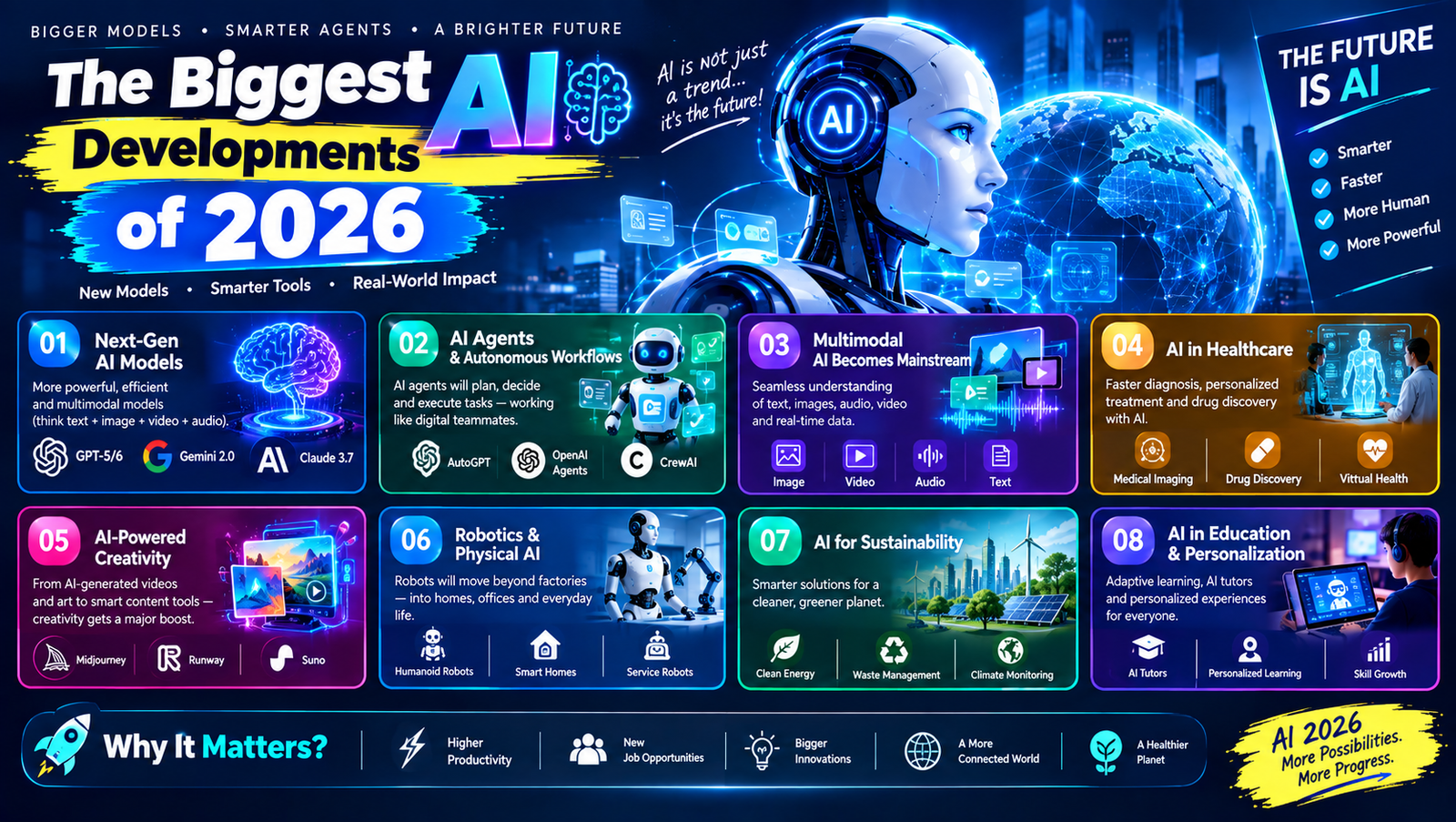
Artificial intelligence is no longer a technology that exists mainly inside research laboratories. In 2026, AI is becoming part of the technology industry itself.
Software companies are using AI to develop software. Cloud providers are building infrastructure for AI workloads. Cybersecurity companies are using AI to detect threats. Robotics companies are combining AI with machines. Businesses are using AI agents to automate workflows, analyze information and complete tasks.
This means AI is not simply creating another technology category. It is changing how technology is designed, developed, deployed and used.
One of the clearest changes is the movement from simple AI assistance toward systems that can complete longer, multi-step tasks. OpenAI’s 2026 research describes this shift from short chatbot interactions toward delegated work in which agents can use tools and operate for longer periods.
Microsoft’s 2026 Work Trend Index similarly describes a workplace where AI and agents increasingly take on execution while people focus more on directing work, making decisions and owning outcomes.
At the same time, AI is moving beyond screens. Physical AI and robotics are being developed to perceive, reason and act in real-world environments.
So, how exactly is AI changing the technology industry?
Let’s look at the biggest changes.
What Does AI Mean for the Technology Industry?
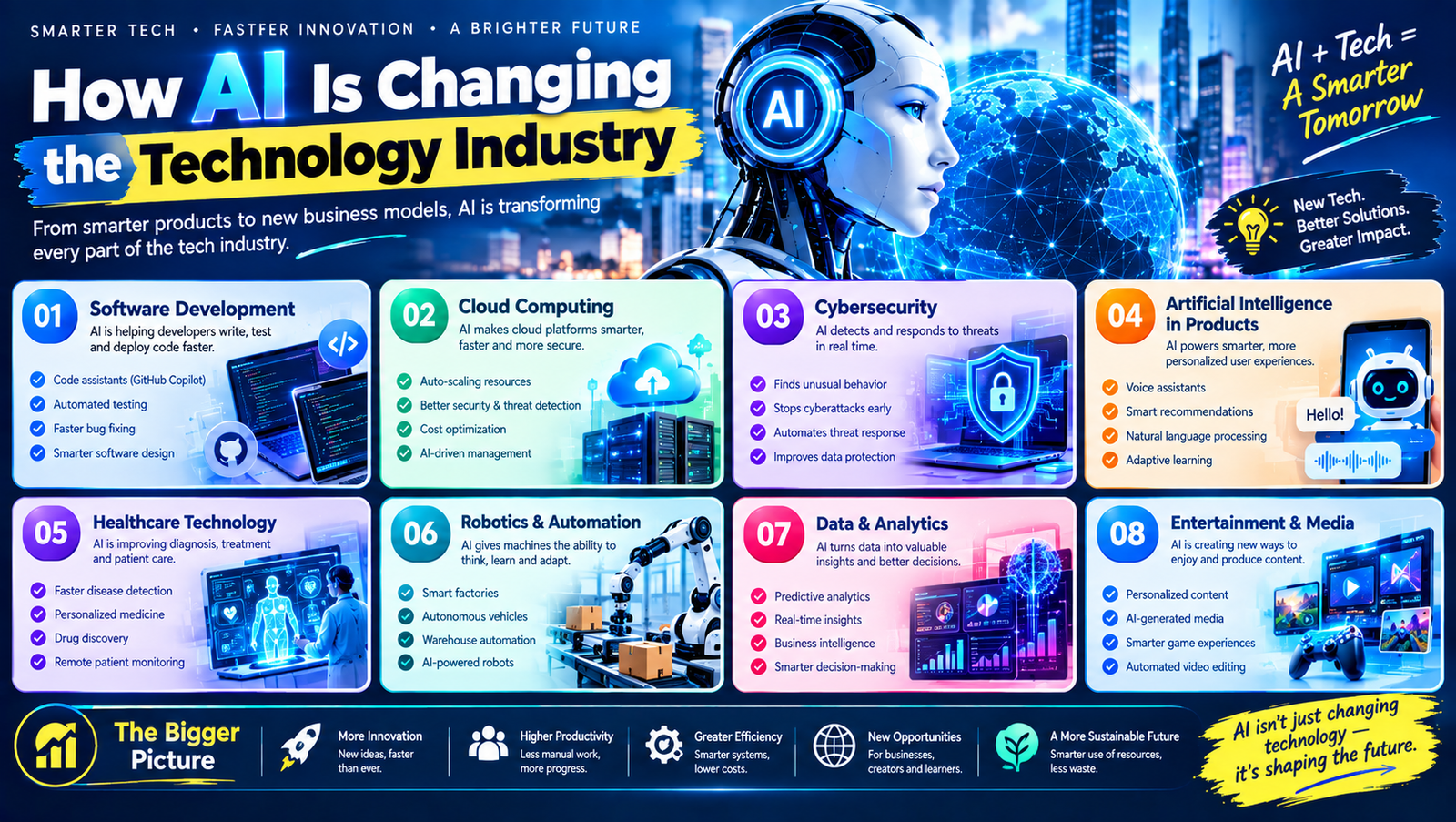
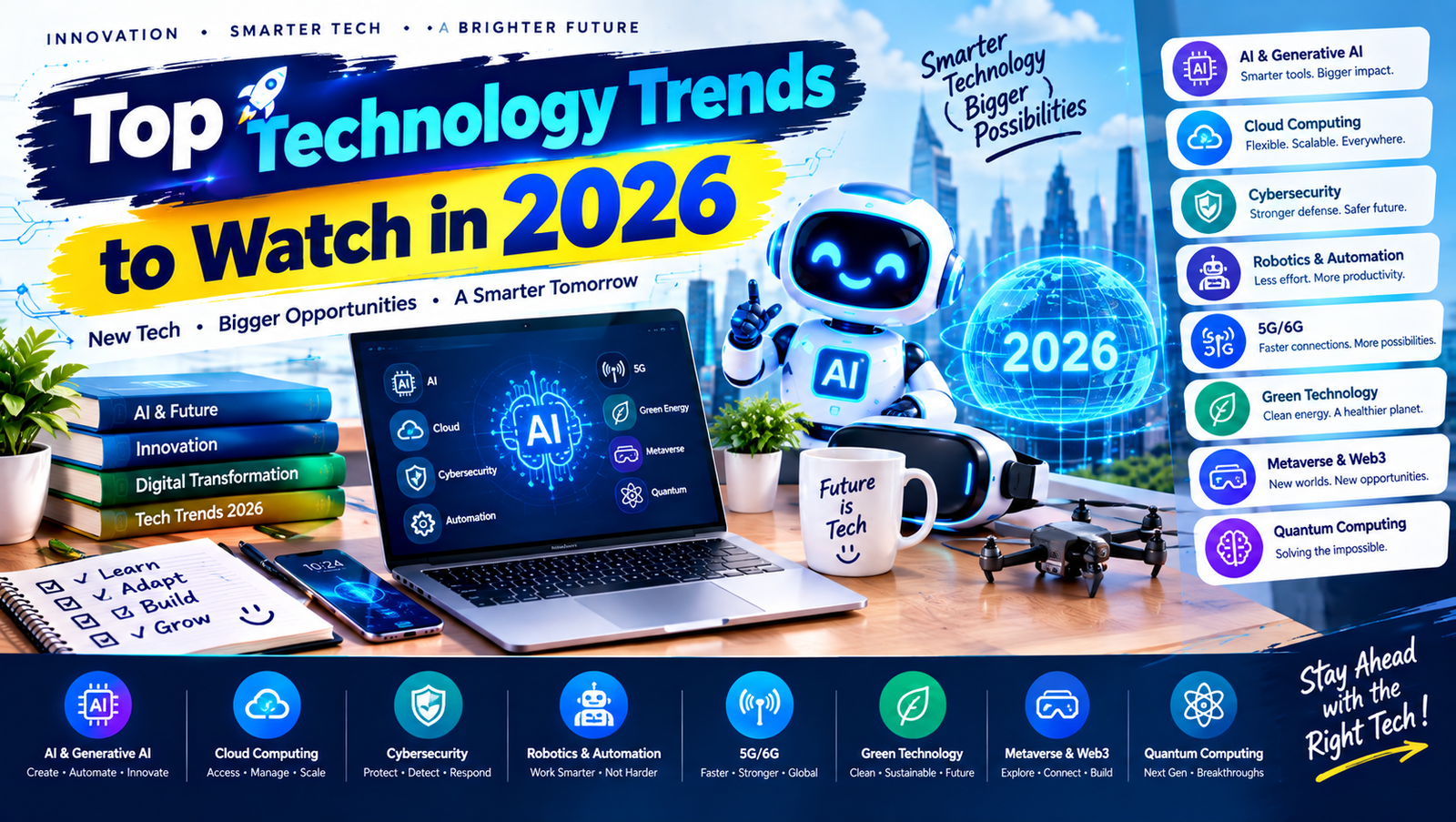
AI is changing technology at several different levels.
| Area | How AI Is Changing It |
|---|---|
| Software Development | AI helps write, test and debug code |
| Cloud Computing | Infrastructure is being optimized for AI workloads |
| Cybersecurity | AI assists with threat detection and response |
| Robotics | AI gives machines greater perception and reasoning |
| Data Analysis | AI helps process and understand large datasets |
| Product Development | Companies can prototype products faster |
| Customer Support | AI assistants and agents automate common requests |
| Search | AI can provide more contextual answers |
| Content Creation | Text, images, video and audio can be generated |
| Business Operations | AI can automate multi-step workflows |
| Hardware | Specialized chips are being designed for AI |
| Research | AI helps accelerate scientific and technical work |
The important point is that these changes are connected.
Better AI models require better chips and infrastructure. Better infrastructure makes AI cheaper and faster. More capable models make software agents more useful. Better agents create demand for new applications.
This creates a cycle of technological change.
1. AI Is Changing How Software Is Developed
Software development is one of the areas where AI’s impact is especially visible.
Traditionally, developers wrote code manually, tested it, searched for bugs and maintained applications.
AI tools can now assist with many of these activities.
They can help developers:
- Generate code
- Explain code
- Find bugs
- Write tests
- Refactor code
- Create documentation
- Understand unfamiliar projects
- Analyze errors
- Automate repetitive development tasks
But the biggest change is the rise of AI coding agents.
Instead of asking AI for one piece of code, developers can increasingly give an AI system a larger objective.
For example:
“Add a user authentication system to this application, update the relevant files, write tests and identify any errors.”
An agent can potentially work through multiple steps rather than stopping after generating a code snippet.
OpenAI’s 2026 research reports that agentic coding has expanded beyond developers and is being used for tasks including automation, data transformation, debugging and structured analysis.
What This Means for Developers
AI does not remove the need for software engineering knowledge.
Developers still need to understand:
- Architecture
- Security
- Databases
- APIs
- Testing
- Performance
- User requirements
- Deployment
However, the workflow can change from:
Human writes everything → AI assists
to:
Human defines the goal → AI performs parts of the implementation → Human reviews and improves
That is a significant shift.
2. AI Is Changing the Role of Programmers
As AI becomes better at generating code, the skills expected from developers may also change.
A developer may spend less time writing repetitive code and more time:
- Designing systems
- Reviewing AI-generated code
- Managing AI agents
- Solving complex technical problems
- Understanding business requirements
- Testing applications
- Improving security
This does not mean programming becomes unimportant.
In fact, understanding programming can become even more valuable because developers who understand code can better evaluate AI-generated solutions.
The future developer may be less like a person typing every line manually and more like an engineer managing a combination of human and AI capabilities.
3. AI Is Transforming Cloud Computing
Cloud computing has already changed the technology industry, but AI is creating new demands for cloud infrastructure.
Modern AI applications can require substantial:
- Computing power
- Memory
- Storage
- Networking
- GPU resources
- Data processing
This has encouraged cloud providers and infrastructure companies to build systems specifically designed for AI.
AI workloads also have different requirements from traditional websites and applications.
A normal web application might need to respond to thousands of relatively simple requests.
An AI application may need to process large models and generate complex outputs.
AI and Cloud Services
Businesses increasingly use cloud platforms to access:
- AI models
- GPU computing
- Data platforms
- AI development tools
- Model deployment systems
- Security services
This makes advanced AI available to companies that do not want to build massive computing infrastructure themselves.
4. AI Is Driving Demand for Specialized Hardware
AI is not only changing software.
It is also changing hardware.
Modern AI workloads require specialized computing systems designed for:
- Training models
- Running models
- Processing large datasets
- Supporting real-time AI applications
This has increased the importance of specialized AI accelerators and high-performance computing.
The relationship works both ways:
Better hardware → better AI performance
and
More capable AI → demand for better hardware
This is one reason AI has become a major driver of innovation in the semiconductor and computing industries.
5. AI Is Changing Cybersecurity
Cybersecurity is another area undergoing significant AI-driven change.
Security teams deal with enormous amounts of information, including:
- Network activity
- Login attempts
- System events
- Software behavior
- Device activity
- Threat intelligence
AI can help identify unusual patterns and prioritize potential threats.
For example, an AI system might help security analysts investigate thousands of alerts and identify which ones require immediate attention.
AI Can Help Security Teams
AI can assist with:
- Threat detection
- Log analysis
- Incident investigation
- Malware analysis
- Security monitoring
- Vulnerability analysis
- Automated response
However, AI also creates new cybersecurity risks.
Attackers can potentially use AI for:
- More convincing phishing
- Automated reconnaissance
- Social engineering
- Malicious code assistance
- Faster content generation
Therefore, cybersecurity teams need to consider both AI as a defense tool and AI as a potential attack-enabling technology.
6. AI Is Transforming Robotics
One of the most interesting changes is the connection between AI and physical machines.
Traditional software operates in a digital environment.
Robots operate in the physical world.
They need to understand:
- Objects
- People
- Movement
- Space
- Obstacles
- Instructions
- Changing environments
AI can help robots process this information.
NVIDIA describes physical AI as technology that enables robots and autonomous systems to perceive, reason, learn and act in physical environments.
In March 2026, NVIDIA announced partnerships across industrial robotics, surgical robotics and humanoid robotics as part of its push to bring physical AI into real-world applications.
7. AI Is Making Robots More Flexible
Traditional industrial robots are often programmed for specific repetitive tasks.
AI-powered robotics aims to make machines more adaptable.
For example, a robot could potentially use visual information and AI reasoning to understand a new task rather than requiring every movement to be manually programmed.
Recent research and development in physical AI is exploring systems that can learn tasks from demonstrations and operate across changing environments.
This could eventually affect:
- Manufacturing
- Warehousing
- Logistics
- Agriculture
- Healthcare
- Construction
- Inspection
- Industrial maintenance
The technology is still developing, and reliable physical deployment requires extensive testing and safety controls.
8. AI Is Changing Business Automation
Automation is one of the biggest reasons businesses are interested in AI.
Traditional automation generally follows predefined rules.
For example:
If a customer submits a form, send an email.
AI-based automation can be more flexible.
An AI system may be able to:
- Read a customer request
- Understand its meaning
- Search relevant information
- Prepare a response
- Update a database
- Create a follow-up task
This is particularly important for AI agents.
OpenAI’s 2026 enterprise data shows a shift toward more agentic AI use, where systems are used to carry out substantive work rather than only answer questions.
9. AI Is Changing Who Can Perform Certain Tasks
AI is also changing the boundaries between technology jobs.
Previously, some tasks required specialized departments.
For example:
- A marketer might need a developer to make a basic website change.
- A salesperson might need an analyst to explore customer data.
- A small business owner might need a copywriter for every piece of marketing content.
AI can give individuals access to capabilities that were previously more specialized.
OpenAI’s 2026 analysis of more than 800,000 messages from U.S. ChatGPT users found that a significant share of occupation-specific AI use involved tasks associated with another occupation.
This does not mean everyone becomes an expert in everything.
Instead, AI can lower the barrier to performing certain basic or intermediate tasks.
10. AI Is Changing Product Development
Building technology products traditionally takes significant time.
Teams may need to:
- Research an idea
- Create designs
- Build prototypes
- Write software
- Test the product
- Analyze feedback
- Improve the design
AI can accelerate several of these steps.
For example, product teams can use AI to:
- Brainstorm features
- Generate prototypes
- Create interface concepts
- Write code
- Analyze user feedback
- Create documentation
- Prepare marketing materials
This can reduce the time between an idea and an early prototype.
Faster Does Not Always Mean Better
AI can help companies move quickly, but speed creates another challenge.
Teams may produce many ideas without properly validating them.
Therefore, successful product development still requires:
- Customer research
- Testing
- Human judgment
- Business analysis
- Security reviews
- Quality control
11. AI Is Transforming Search and Information Discovery
Search technology is also changing.
Traditional search engines primarily return links.
AI-powered systems can increasingly provide:
- Summaries
- Direct explanations
- Follow-up conversations
- Comparisons
- Research assistance
- Personalized context
This changes how people find information online.
Instead of:
Question → search results → multiple websites → manual research
users may increasingly experience:
Question → AI research → summarized information → follow-up questions
This also creates new challenges for websites and publishers.
Businesses need to think about how their content can remain useful in an environment where users may receive AI-generated summaries before visiting individual websites.
12. AI Is Changing Content Creation
The technology industry has also been transformed by generative AI.
AI can now assist with:
- Blog posts
- Images
- Videos
- Audio
- Presentations
- Social media
- Advertising concepts
- Product descriptions
- Code
This means a small team can potentially produce more digital content than before.
For example, one creator can use AI to:
- Research a topic
- Create an outline
- Draft content
- Generate images
- Create a short video
- Write social posts
- Prepare an email newsletter
However, high-quality content still requires human input.
AI-generated content should be checked for:
- Accuracy
- Originality
- Brand consistency
- Repetition
- Copyright concerns
- Unsupported claims
13. AI Is Changing Data Analysis
Businesses generate huge amounts of data.
Traditionally, analyzing that information often required specialized tools and technical skills.
AI interfaces can make data analysis more accessible.
A user may be able to ask:
“What changed in our sales this quarter?”
or:
“Which products experienced the biggest decline?”
AI can help interpret data and explain patterns in natural language.
This does not eliminate the need for analysts.
Instead, it can allow analysts to spend more time on deeper questions and less time on repetitive data preparation.
14. AI Is Changing Customer Support
Customer service is another major area of AI adoption.
AI assistants can help answer common questions about:
- Products
- Orders
- Accounts
- Billing
- Policies
- Troubleshooting
More advanced AI agents can potentially connect with business systems and take actions.
For example:
Customer asks about an order → AI checks order status → explains the situation → creates a support request if needed.
This can reduce repetitive work for human support teams.
However, sensitive or complicated customer problems may still require human involvement.
A good system should know when to escalate rather than continue automatically.
15. AI Is Changing Healthcare Technology
AI is also influencing healthcare technology.
Applications include:
- Medical research
- Medical imaging
- Drug discovery
- Documentation
- Administrative workflows
- Patient-support systems
- Data analysis
AI can help researchers process large datasets and identify patterns.
In drug discovery and biological research, specialized AI models are being developed to work with complex biological information.
However, healthcare is a high-stakes environment.
AI systems should not be treated as automatically correct, and medical decisions require appropriate professional oversight.
16. AI Is Accelerating Scientific and Technical Research
AI is increasingly becoming a research assistant.
Researchers can use AI for:
- Literature analysis
- Coding
- Data processing
- Simulation
- Hypothesis exploration
- Documentation
- Experiment planning
OpenAI’s 2026 research on its own research teams describes coding agents being used across research workflows, including more experimentation and broader technical work.
This illustrates an important change.
AI is not simply producing final answers.
It can help researchers perform parts of the process that leads to new discoveries.
17. AI Is Creating New Types of Technology Companies
AI is also changing entrepreneurship.
A startup may no longer need a large team to build its first product.
A small team can use AI for:
- Programming
- Customer research
- Marketing
- Design
- Documentation
- Data analysis
- Support
This lowers some barriers to starting a technology business.
But it also increases competition.
If everyone can create products faster, companies need stronger differentiation.
That can come from:
- Better customer understanding
- Proprietary data
- Unique products
- Strong branding
- Better user experience
- Industry expertise
18. AI Is Changing the Skills Technology Companies Need
As AI takes over more repetitive work, organizations may place greater value on skills such as:
Critical Thinking
Employees need to evaluate AI-generated information.
Problem Solving
People need to define the right problem before asking AI for a solution.
AI Literacy
Employees should understand AI capabilities and limitations.
Communication
Clear instructions are important when working with AI systems.
Technical Knowledge
Understanding data, software and automation remains valuable.
Domain Expertise
Industry knowledge helps people determine whether AI output makes sense.
19. AI Is Changing Management and Team Structures
AI can also affect how teams are organized.
If an AI system can handle part of a workflow, a smaller human team may be able to manage a larger workload.
This could lead organizations to rethink:
- Job responsibilities
- Team structures
- Workflow design
- Management
- Training
- Performance measurement
Microsoft’s 2026 Work Trend Index frames this as a shift where agents take on more execution while humans increasingly direct work and remain responsible for outcomes.
The practical challenge is not simply introducing AI.
Organizations need to redesign processes around it.
20. AI Is Increasing the Importance of Human Oversight
As AI becomes more capable, human oversight becomes more important in many situations.
Consider an AI system that can access company files or perform actions in business software.
If the system makes a mistake, the consequences may be greater than a wrong chatbot answer.
Therefore, businesses should consider:
- Access controls
- Approval requirements
- Monitoring
- Audit logs
- Testing
- Security
- Human review
This is especially important when AI systems can act rather than simply provide information.
21. AI Is Changing the Technology Industry’s Approach to Safety
Physical AI creates an especially important safety challenge.
If an AI system controls software, an error might produce incorrect information.
If an AI system controls a machine, an error could potentially cause physical damage.
This is why robotics companies are investing in simulation, evaluation and safety systems.
For example, NVIDIA announced Halos for Robotics in June 2026 as a safety architecture intended for robotics and physical AI systems.
The broader lesson is that AI safety is not only about what a model says.
It is also about what the system is allowed to do.
22. AI Is Making Technology More Accessible
One of the most positive changes is accessibility.
People who previously needed specialized technical skills can now accomplish certain tasks through natural-language interfaces.
A small business owner can ask AI to help create marketing material.
A student can ask for an explanation of a difficult topic.
A non-programmer can use AI to understand basic code.
A freelancer can automate repetitive administrative work.
This does not make expertise unnecessary, but it can make technology easier to access.
23. AI Is Increasing the Speed of Technological Change
Technology has always changed quickly.
AI may accelerate this process because AI itself can help build technology.
For example:
AI helps write software → software helps build AI tools → those tools help create more software.
AI can also help with research, testing and experimentation.
This creates a feedback loop in which technological development can become faster.
However, faster development also means individuals and businesses need to update their knowledge more frequently.
24. What Could the AI-Powered Technology Industry Look Like?
The future technology industry may be less divided between separate tools.
Instead, software may become increasingly connected.
Imagine a business where:
- An AI assistant reads incoming requests.
- Another system analyzes customer information.
- A coding agent updates an application.
- A cybersecurity system monitors activity.
- An analytics agent prepares reports.
- Humans review important decisions.
These systems could communicate with one another through software tools and APIs.
This is the direction behind the broader movement toward agentic technology.
Challenges Created by AI
AI brings opportunities, but it also creates important challenges.
Accuracy
AI systems can generate incorrect information.
Privacy
AI applications may process sensitive business or personal data.
Security
AI agents can create new attack surfaces.
Employment Changes
Some tasks may become automated or significantly redesigned.
Overdependence
People may rely on AI without understanding its limitations.
Copyright and Ownership
AI-generated and AI-assisted content can raise complicated ownership and licensing questions.
Cost
Advanced AI infrastructure can be expensive.
Governance
Companies need clear policies for responsible AI use.
These issues do not mean AI should not be used. They mean organizations need to adopt it carefully.
How Businesses Can Prepare for AI
Businesses do not need to transform everything overnight.
A practical approach is:
Step 1: Identify Repetitive Work
Find tasks employees perform repeatedly.
Step 2: Test AI on Low-Risk Tasks
Start with activities where mistakes are easy to detect.
Step 3: Measure Results
Track:
- Time saved
- Cost
- Quality
- Errors
- Employee experience
Step 4: Create AI Guidelines
Define what employees can and cannot share with AI systems.
Step 5: Train Employees
Teach people how to use AI responsibly.
Step 6: Introduce Automation Carefully
Only allow AI agents to perform actions that match their permissions.
Step 7: Keep Humans Responsible
Important decisions should have appropriate human oversight.
How Individuals Can Prepare for AI-Driven Technology
You do not need to become an AI engineer.
Start by learning how AI affects your own work.
For example:
If you are a writer: learn AI-assisted research and editing.
If you are a developer: learn AI coding agents.
If you are a mark





Leave a Reply