
Meta Title: Best AI Tools for Office Work in 2026 | Productivity Guide
Meta Description: Discover the best AI tools for office work in 2026. Learn how AI can help with emails, documents, meetings, research, spreadsheets, presentations, and daily tasks.
Focus Keyword: AI tools for office work
Secondary Keywords: best AI office tools, AI productivity tools, AI tools for business, AI tools for employees, office automation tools, AI for workplace productivity
Suggested URL Slug: /best-ai-tools-for-office-work/
Introduction
Office work has changed significantly in recent years. Tasks that once required hours of manual effort can now be completed faster with the help of artificial intelligence.
Writing emails, preparing documents, summarizing meetings, analyzing spreadsheets, creating presentations, organizing information, and researching topics can all be supported by AI tools.
The goal of using AI at work is not necessarily to replace people. Instead, AI can handle repetitive or time-consuming parts of a task while employees focus on communication, decision-making, creativity, and other responsibilities that require human judgment.
There are now many AI tools for office work, but choosing the right ones can be confusing. Some tools are designed for writing, others for meetings, spreadsheets, presentations, research, project management, or general productivity.
In this guide, we will explore the major types of AI office tools, how they can be used, their benefits and limitations, and how to create a practical AI-powered office workflow.
What Are AI Tools for Office Work?
AI office tools are software applications that use artificial intelligence to help people complete workplace tasks.
Depending on the tool, AI can help you:
- Write and rewrite text
- Create emails
- Summarize long documents
- Analyze information
- Generate reports
- Create presentations
- Organize meetings
- Take meeting notes
- Extract action items
- Work with spreadsheets
- Brainstorm ideas
- Research topics
- Translate content
- Create templates
- Automate repetitive processes
Instead of doing every step manually, you can give an AI tool instructions and then review its output.
For example, instead of spending 20 minutes writing a professional email, you can provide the important information to an AI assistant and ask it to create a clear draft.
You still decide what should be sent.
Why Should You Use AI for Office Work?
AI can be useful because many office jobs contain repetitive tasks.
Employees may spend a significant amount of their working day:
- Reading emails
- Writing messages
- Updating documents
- Attending meetings
- Taking notes
- Searching for information
- Preparing reports
- Organizing data
- Creating presentations
- Rewriting content
AI can assist with many of these activities.
1. Save Time
AI can quickly produce a first draft, summarize information, or organize unstructured notes.
2. Reduce Repetitive Work
Tasks such as formatting, rewriting and creating standard documents can often be streamlined.
3. Improve Organization
AI can turn meeting discussions or large amounts of information into structured summaries and action lists.
4. Generate Ideas
When you are stuck, AI can provide possible approaches, questions, outlines, or alternatives.
5. Support Better Communication
AI can help make emails and documents clearer, more concise, and appropriate for different audiences.
However, AI-generated information should still be reviewed before important business decisions or communications.
Best Types of AI Tools for Office Work
Instead of looking for one tool that does everything, it is useful to divide AI office tools into categories.
| AI Tool Category | Common Office Uses |
|---|---|
| AI assistants | Questions, brainstorming, writing |
| Writing tools | Emails, reports, documents |
| Meeting assistants | Transcripts, summaries, action items |
| Presentation tools | Slides and visual content |
| Spreadsheet AI | Data analysis and formulas |
| Research tools | Information gathering |
| Automation tools | Repetitive workflows |
| Translation tools | Multilingual communication |
| Project management AI | Tasks and planning |
| Note-taking tools | Notes and knowledge organization |
Let’s look at these categories in more detail.
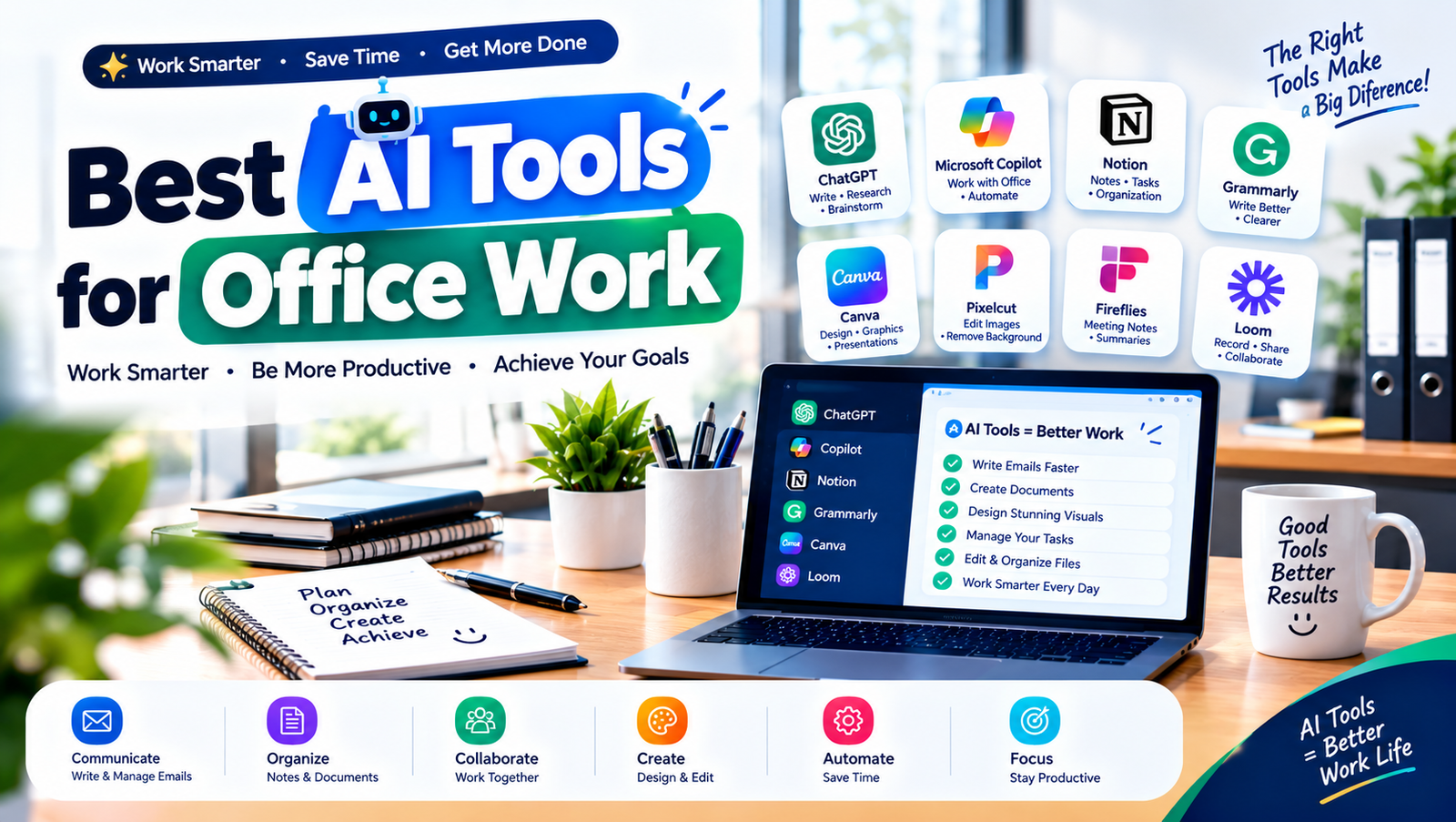
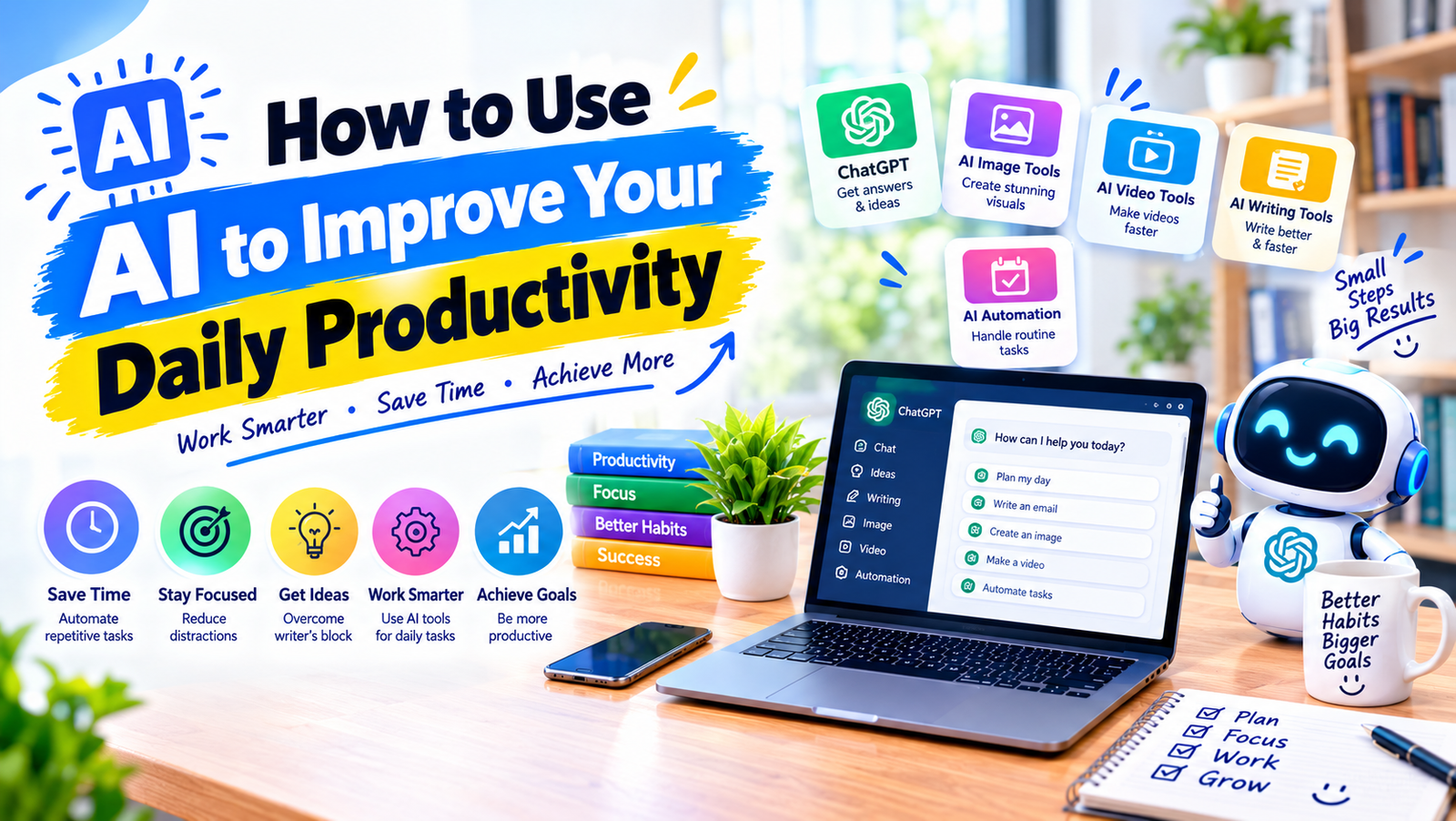
1. AI Assistants for General Office Work
General-purpose AI assistants can be useful for a wide range of workplace activities.
Tools such as ChatGPT, Microsoft Copilot, and Google Gemini can assist with tasks including writing, brainstorming, summarization, planning, research, and analysis.
You can use an AI assistant as a starting point for many everyday tasks.
Example
Instead of writing:
“Write an email.”
Give the AI more context:
“Write a professional email to a client explaining that the project will be delayed by two days. Keep the tone polite and provide a short explanation.”
The second prompt provides enough information for a more useful result.
Office Tasks You Can Give an AI Assistant
You can ask it to:
- Draft an email
- Rewrite a paragraph
- Create an agenda
- Summarize notes
- Create a checklist
- Explain a complicated topic
- Brainstorm ideas
- Create a report outline
- Prepare interview questions
- Generate spreadsheet formulas
- Create a project plan
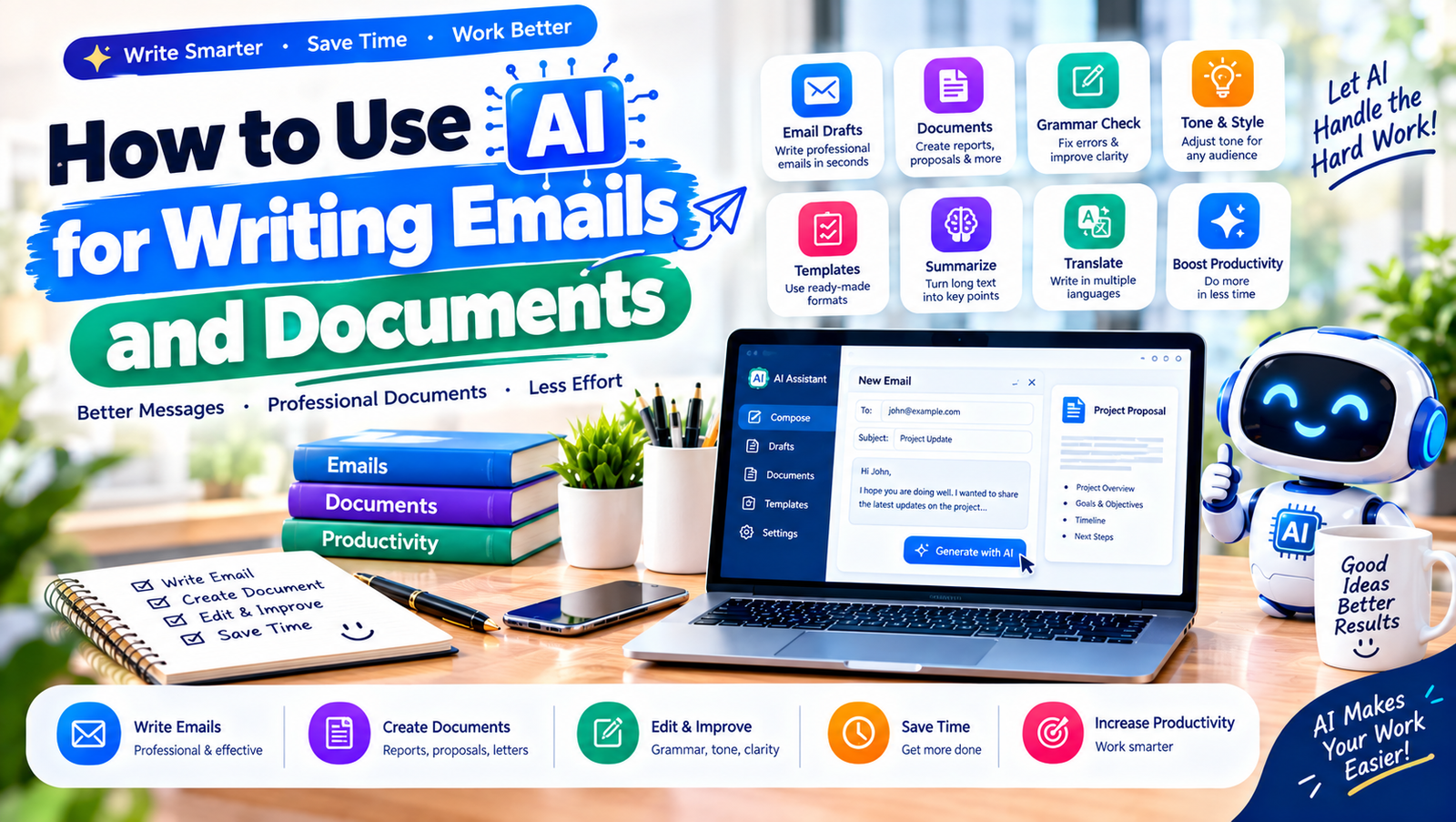
2. AI Tools for Writing Emails
Email remains one of the most common forms of office communication.
Employees may write dozens of emails every week, and some messages require careful wording.
AI can help create first drafts and improve existing messages.
AI can help with:
- Professional emails
- Follow-up messages
- Meeting invitations
- Customer responses
- Internal announcements
- Apology emails
- Request emails
- Sales messages
- Short replies
Example Prompt
“Rewrite this email in a professional but friendly tone. Keep it under 120 words and make the request clear.”
This approach is usually more useful than simply asking AI to “make it professional.”
You can specify:
- Audience
- Tone
- Length
- Purpose
- Important information
- Call to action
Always check names, dates, numbers, attachments, and other important details before sending.
3. AI Tools for Documents and Reports
Creating business documents can take considerable time.
AI can help with the early stages of writing documents, including:
- Reports
- Proposals
- Business plans
- Policies
- Internal documentation
- Project summaries
- Research summaries
- Training materials
For example, you can provide bullet points and ask AI to turn them into a structured report.
A Practical Workflow
Step 1: Collect your information.
Step 2: Give the information to the AI.
Step 3: Ask it to create an outline.
Step 4: Review the outline.
Step 5: Ask AI to help draft individual sections.
Step 6: Check the final document yourself.
This process is generally better than asking AI to create an entire important report without supervision.
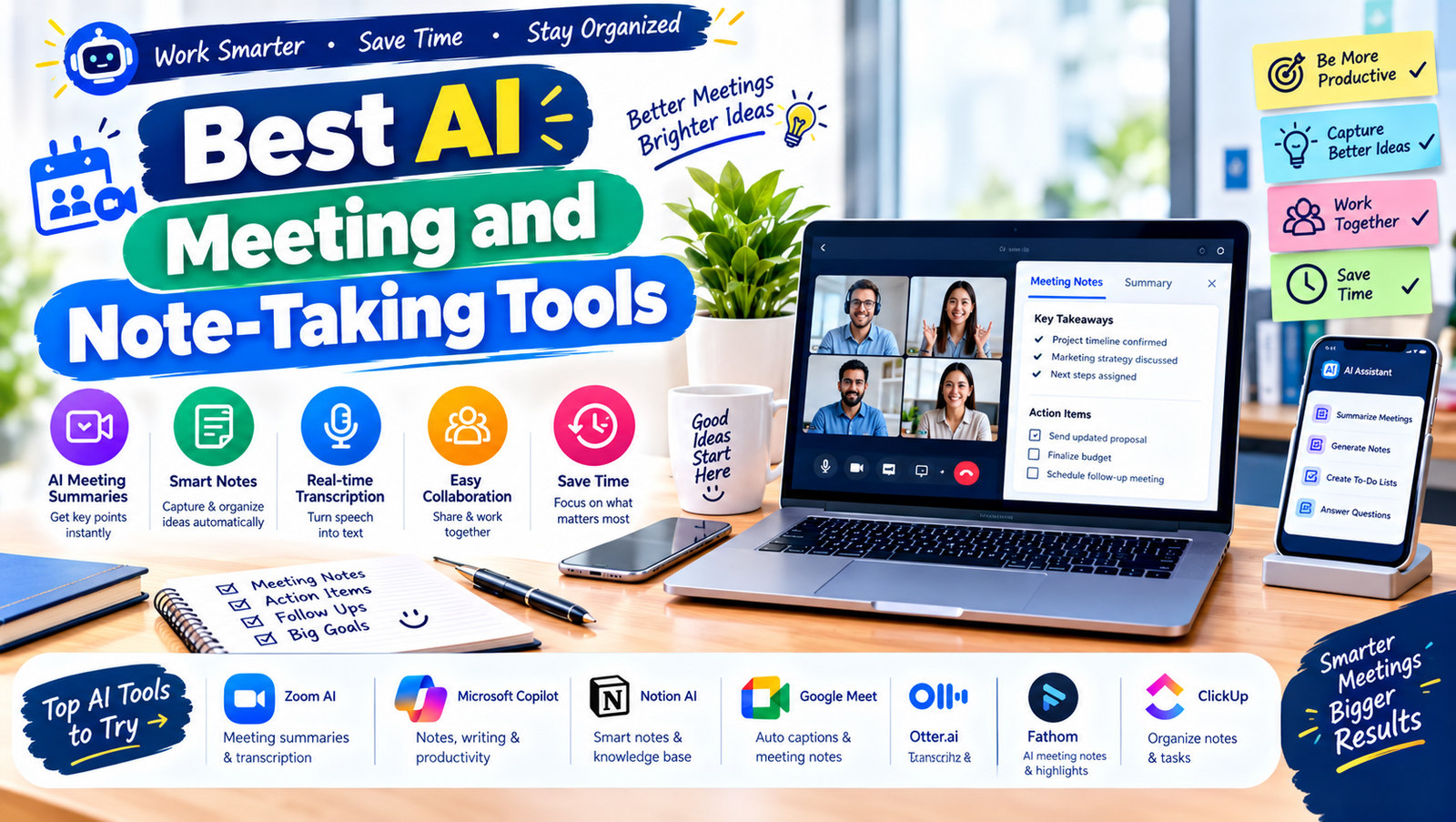
4. AI Meeting and Note-Taking Tools
Meetings are another area where AI can save time.
Modern meeting assistants can record or process meeting conversations, create transcripts, summarize discussions, identify important topics, and help extract follow-up tasks.
Microsoft Teams, for example, offers meeting recap and intelligent recap features that can include transcripts, notes, shared content and follow-up tasks.
Zoom also offers AI Companion features that can assist with meeting summaries, questions and follow-up information, including support for certain third-party meeting scenarios.
Tools such as Otter can automatically join supported online meetings and provide transcription, summaries, questions and other meeting information.
Example
Instead of manually writing:
- What was discussed?
- Who will do what?
- What decisions were made?
- What needs to happen next?
AI can help organize this information into a structured summary.
Still, meeting participants should review AI-generated notes because automated transcription and summaries can contain errors.
5. AI Tools for Presentations
Creating a professional presentation involves more than adding text to slides.
You need to think about:
- Structure
- Headlines
- Supporting points
- Visuals
- Data
- Speaker notes
- Audience
AI presentation tools can help generate an initial structure from a topic or document.
For example:
“Create a 10-slide presentation about our quarterly marketing strategy for senior management.”
The resulting outline could include:
- Executive Summary
- Business Goals
- Previous Results
- Current Challenges
- Market Situation
- Strategy
- Budget
- Timeline
- Expected Results
- Next Steps
You can then edit the content and design.
AI should help with the first draft rather than becoming the final decision-maker.
6. AI Tools for Spreadsheets and Data
Spreadsheets are widely used in offices for:
- Budgets
- Sales reports
- Employee records
- Inventory
- Financial calculations
- Project tracking
- Performance analysis
AI can help users understand data and create formulas.
For example, instead of searching online for a complicated spreadsheet formula, you could explain what you want:
“I have sales data in columns A to D. I want to calculate the total sales for each employee and identify the employee with the highest total.”
AI can help suggest a formula or explain the steps.
Some AI-powered spreadsheet features can also help analyze datasets and identify patterns.
Important Tip
Never blindly trust an AI-generated formula.
Test it with known values before using it in an important business spreadsheet.
7. AI Tools for Research
Office workers often need to research:
- Competitors
- Products
- Markets
- Customers
- Industry trends
- Technologies
- Business topics
AI can make the first stage of research faster by helping you organize questions and summarize information.
For example:
“Create a research checklist for comparing three project management software platforms.”
AI might suggest categories such as:
- Pricing
- Features
- User management
- Integrations
- Security
- Reporting
- Support
- Ease of use
You can then research each category systematically.
For factual or business-critical information, verify important claims against reliable primary sources.
8. AI Tools for Task and Project Management
Project management often involves tracking:
- Tasks
- Deadlines
- Owners
- Priorities
- Dependencies
- Meetings
- Progress
AI can help turn unstructured information into organized tasks.
For example, after a project meeting, you might have these notes:
Website redesign approved. Sarah will prepare homepage content. Ahmed will check mobile design. Client review Friday. Pricing page needs updated information.
AI could help turn those notes into:
| Task | Owner | Deadline |
|---|---|---|
| Prepare homepage content | Sarah | Before review |
| Check mobile design | Ahmed | Before review |
| Update pricing information | Team | Before client review |
| Client review | Client + Team | Friday |
The team should confirm the assignments and deadlines before treating the AI output as an official project record.
9. AI Translation Tools
Global businesses frequently communicate with people who speak different languages.
AI translation can help with:
- Emails
- Internal documents
- Customer messages
- Product descriptions
- Basic communication
- Draft translations
However, important legal, financial, medical, or contractual documents may require professional human translation or review.
The more sensitive the information, the more important human oversight becomes.
10. AI Tools for Brainstorming
Sometimes the biggest problem isn’t writing.
It’s figuring out what to write.
AI can act as a brainstorming partner.
For example:
“Give me 15 ideas for improving customer support response times. Group them into low-cost, medium-cost, and long-term ideas.”
You can then evaluate the suggestions.
This is particularly useful when starting:
- Marketing campaigns
- Blog projects
- Business plans
- Training programs
- Product ideas
- Social media campaigns
- Internal processes
Remember that generating ideas and deciding which ideas are actually suitable are two different tasks.
How to Choose the Right AI Office Tool
You don’t need ten AI tools to become productive.
Start with the tasks that consume the most time.
Ask yourself:
What do I do repeatedly?
If you write many emails, look for writing assistance.
If you attend many meetings, consider meeting transcription and summary tools.
If you work heavily with spreadsheets, look for data-analysis capabilities.
If you create presentations frequently, consider AI presentation features.
What software does my company already use?
This is important.
If your organization already uses Microsoft 365, Teams and Copilot-related features may fit naturally into the existing workflow.
If your organization uses Google Workspace, Google’s AI features may integrate more naturally with the existing environment.
Integration can be more valuable than having a tool with dozens of extra features.
AI Office Tools: One Tool vs Multiple Tools
There are two common approaches.
Approach 1: One Main AI Assistant
You use one general AI assistant for most tasks.
Advantages
- Simple
- Easy to learn
- Fewer subscriptions
- One familiar workflow
Disadvantages
- May not specialize in every task
- Meeting and spreadsheet integrations may be limited
- You may still need other workplace software
Approach 2: Specialized AI Tools
You use different tools for different tasks.
For example:
- AI assistant → brainstorming
- Meeting AI → meeting notes
- Spreadsheet AI → data
- Presentation AI → slides
- Automation tool → repetitive workflows
Advantages
- Specialized capabilities
- Better integration for specific tasks
- Can automate more processes
Disadvantages
- More tools to manage
- Potentially higher costs
- More learning required
- Information can become fragmented
For many individuals, starting with one general AI assistant and adding specialized tools only when necessary is a practical approach.
How to Use AI Without Losing Human Judgment
AI can produce impressive results, but it does not mean every output is correct.
A good office workflow keeps humans involved.
Use AI for:
- First drafts
- Brainstorming
- Summarization
- Organization
- Rewriting
- Routine analysis
- Templates
Keep humans responsible for:
- Final decisions
- Sensitive communications
- Important calculations
- Legal commitments
- Confidential information
- Strategic decisions
- Fact verification
A useful rule is:
Let AI accelerate the work, but let people remain responsible for the result.
Protect Confidential Office Information
This is one of the most important considerations when using AI at work.
Before entering company information into an AI service, understand your organization’s rules and the tool’s privacy and data-handling policies.
Avoid casually pasting:
- Passwords
- Private customer information
- Financial credentials
- Confidential contracts
- Sensitive employee information
- Internal security information
- Proprietary business data
Your company may already have approved AI tools and policies. Follow them.
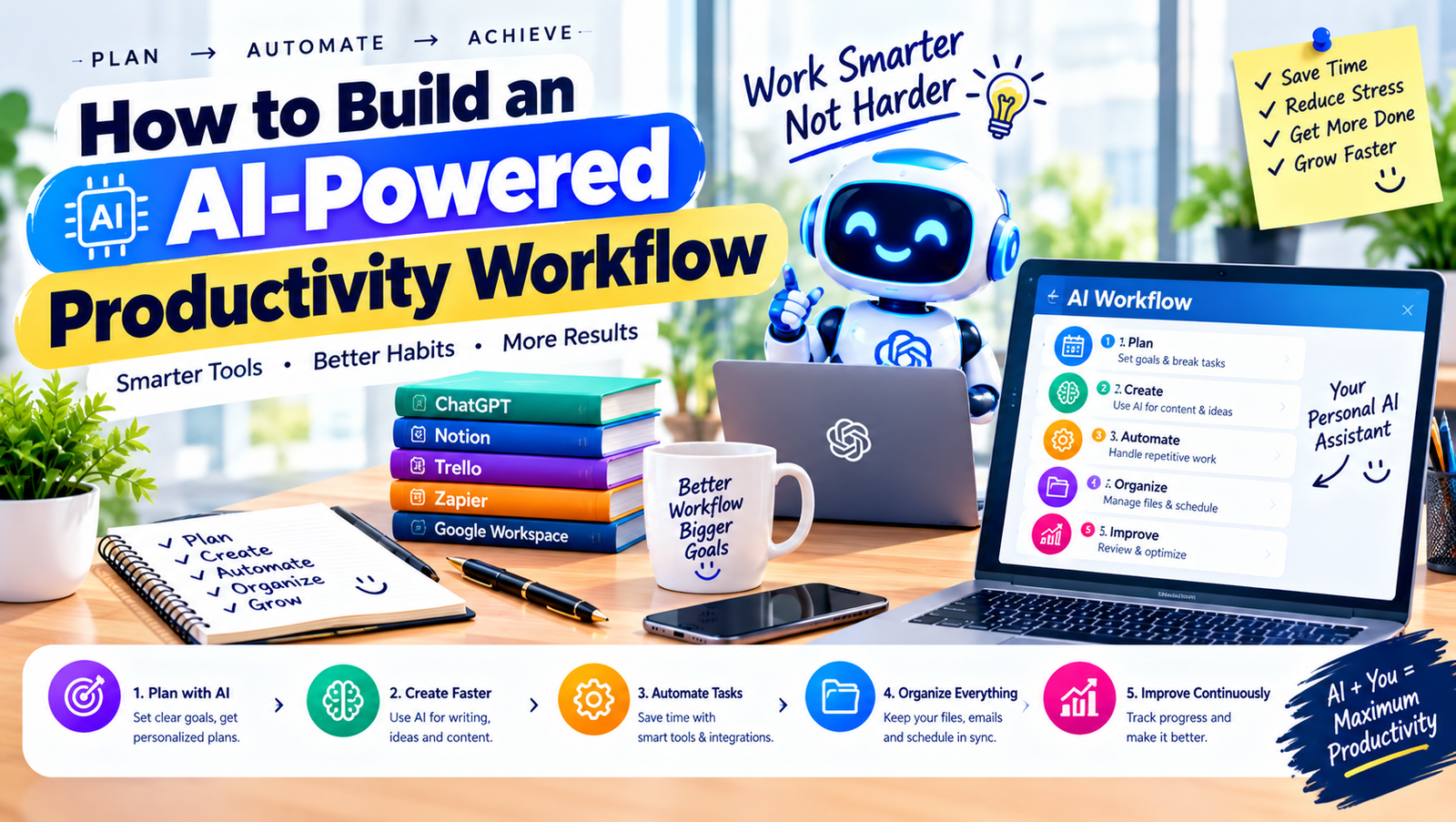
A Simple AI Office Workflow
You can create a basic workflow around five steps.
Step 1: Capture
Collect emails, notes, tasks and information.
Step 2: Organize
Use AI to summarize or categorize the information.
Step 3: Create
Use AI to create drafts, outlines, formulas or plans.
Step 4: Review
Check facts, numbers, tone and accuracy.
Step 5: Finalize
Make the final human decision and send, publish or submit the result.
This simple process prevents the common mistake of treating AI output as automatically correct.
10 Useful AI Prompts for Office Workers
Here are some practical prompts you can adapt.
“Rewrite this email to sound professional, clear and friendly. Keep it under 150 words.”
Meeting
“Turn these meeting notes into decisions, action items, owners and deadlines.”
Report
“Create a professional report outline from the following information.”
Research
“Create a research checklist for evaluating these three competitors.”
Presentation
“Create a 10-slide presentation structure for this topic. Include a clear objective for each slide.”
Spreadsheet
“Explain how to calculate the monthly growth rate from these columns.”
Planning
“Turn these tasks into a prioritized work plan for the next five days.”
Writing
“Improve the clarity of this paragraph without changing its meaning.”
Brainstorming
“Give me 20 practical ideas for improving this business process. Group them by cost and difficulty.”
Summary
“Summarize this document into five key points and list any decisions or actions mentioned.”
Common Mistakes When Using AI at Work
1. Using vague prompts
“Write a report” gives AI very little context.
Provide the audience, purpose, length, tone and important information.
2. Copying AI output without checking
AI can make factual, numerical or contextual mistakes.
Always review important output.
3. Using too many tools
More tools don’t automatically mean more productivity.
Too many apps can create additional complexity.
4. Ignoring company policies
Your organization may have specific rules about approved AI tools and confidential data.
Follow those rules.
5. Asking AI to make every decision
AI can provide options and analysis, but important business decisions should remain under appropriate human control.
How AI Could Change Office Work
AI is increasingly becoming part of everyday workplace software.
Instead of opening a separate AI website for every task, AI capabilities are increasingly appearing directly inside productivity applications.
This means the future office workflow may look less like:
Open document → copy text → open AI → paste text → generate answer → copy answer back
and more like:
Work inside your normal application → use built-in AI assistance → review → finalize
This can reduce the friction involved in using AI.
The biggest benefit may therefore not be AI generating text by itself. It may be AI becoming part of the normal workflow.
Frequently Asked Questions
What are the best AI tools for office work?
The right tool depends on your work. General AI assistants can help with writing, brainstorming and summarization, while specialized tools can support meetings, spreadsheets, presentations and automation.
Can AI replace office workers?
AI can automate or assist with some workplace tasks, but many office responsibilities still require human communication, judgment, context, creativity and accountability.
Can AI write professional emails?
Yes. AI can create and improve email drafts based on your instructions. You should review the message before sending it.
Can AI summarize meetings?
Yes. Several modern meeting platforms and specialized tools can generate transcripts, summaries and action items. The exact capabilities depend on the platform and plan.
Is it safe to put company information into AI?
Not automatically. Check your company’s AI policy and the tool’s privacy and data-handling terms before entering confidential information.
Can AI help with Excel or spreadsheets?
Yes. AI can explain formulas, analyze data, identify patterns and help users work with spreadsheet information. Important calculations should always be checked.
Do I need many AI tools?
No. Many people can start with one general AI assistant and add specialized tools only when they have a clear need.
How can beginners start using AI at work?
Start with one repetitive task, such as email drafting, summarization or brainstorming. Learn how to write clear prompts, review the output and gradually expand your workflow.
Final Thoughts
AI tools for office work can make everyday tasks faster and more organized.
From emails and documents to meetings, presentations, research and spreadsheets, AI can support many parts of a modern workplace.
But productivity does not come from simply using as many AI tools as possible.
The better approach is to identify repetitive tasks, choose tools that fit your existing workflow, create clear instructions, and review the results before using them.
Think of AI as a workplace assistant rather than an automatic replacement for human judgment.
When used thoughtfully, AI can reduce repetitive work and give employees more time to focus on communication, creativity, problem-solving and meaningful work.
The best AI office workflow is not the one with the most tools. It is the one that helps you complete useful work more efficiently while keeping people in control of the final result.





Leave a Reply