
Meta Title: Best AI Image Generators in 2026: Top Tools Explained
Meta Description: Discover the best AI image generators in 2026, how they work, what they can create, and how to choose the right AI image tool for your needs.
Focus Keyword: Best AI Image Generators in 2026
Secondary Keywords: AI image generators, best AI art generators, AI image generator tools, text to image AI, AI photo generator, AI art tools, free AI image generators
Suggested URL Slug: /best-ai-image-generators-in-2026/
Introduction
Creating high-quality images used to require expensive software, professional design skills, or a lot of time. Today, artificial intelligence has changed that process.
With modern AI image generators, you can describe an image using ordinary language and receive a generated visual based on your instructions. You can create illustrations, realistic scenes, product concepts, social media graphics, characters, backgrounds, posters, and many other types of visual content.
This technology has become useful for bloggers, marketers, students, designers, business owners, social media creators, and people who simply want to experiment with creative ideas.
But there is one problem: there are now many AI image generators available.
Different tools are designed for different purposes. Some focus on photorealistic images, some offer strong editing features, some are useful for design workflows, and others provide access to multiple image models.
In this guide, we’ll explain the best AI image generators in 2026, what makes them different, what you can use them for, and how to choose the right tool.
What Is an AI Image Generator?
An AI image generator is a software system that can create images based on instructions, usually called prompts.
For example, you could enter:
“A realistic wooden cabin beside a peaceful mountain lake at sunrise, cinematic photography.”
The AI interprets the description and generates an image based on the requested elements.
Modern systems can also support image editing. Instead of creating an image from nothing, you may be able to upload an existing image and ask the AI to change specific parts.
For example:
“Remove the people in the background and replace the background with a beach.”
The exact capabilities depend on the AI model and platform.
How Do AI Image Generators Work?
Although the technology behind image generation is highly technical, the basic idea can be explained simply.
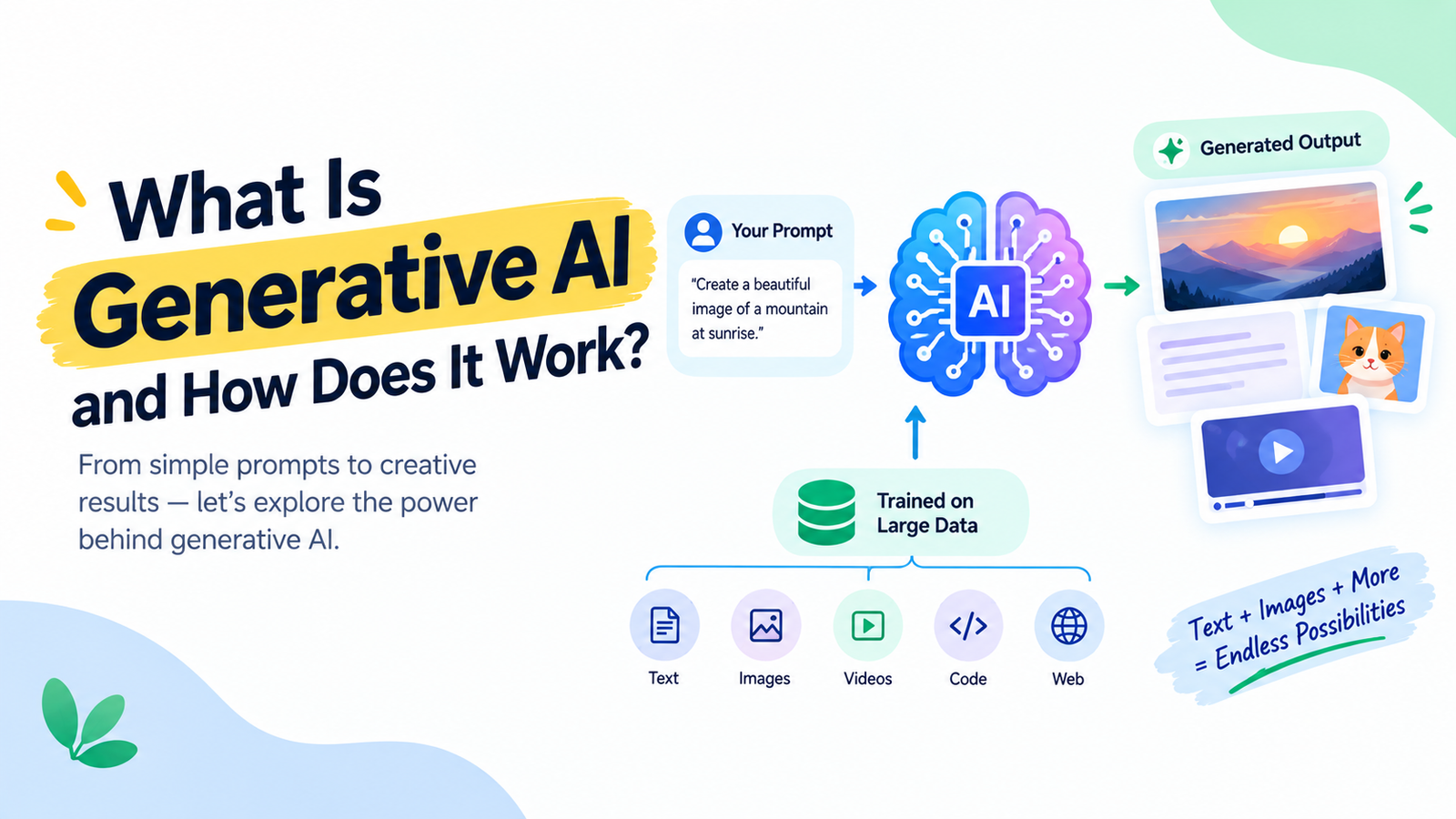
AI image models are trained using large collections of image-related data. During training, the model learns relationships between visual elements and their descriptions.
When you enter a prompt, the system processes your instructions and generates an image that attempts to match the requested concept.
A simplified workflow looks like this:
Training Data → AI Model → Text Prompt → Image Generation → Refinement
Many modern tools also support reference images, allowing users to provide additional visual information.
Why Are AI Image Generators So Popular?
There are several reasons for their rapid adoption.
1. They Save Time
A designer may spend significant time creating an initial concept manually.
An AI generator can produce multiple concepts quickly, allowing the creator to explore ideas before deciding which direction to pursue.
2. They Lower the Technical Barrier
You don’t necessarily need advanced Photoshop or illustration skills to experiment with AI-generated images.
A clear description can be enough to get started.
3. They Help With Brainstorming
AI images can turn abstract ideas into visual concepts.
For example, a business owner could create several possible packaging concepts before investing in professional design.
4. They Support Fast Experimentation
You can change the prompt and generate another variation.
This makes AI useful during the early stages of creative work.
Best AI Image Generators in 2026
There is no single AI image generator that is perfect for every person.
The right choice depends on your goal.
Here are some major tools and ecosystems worth considering in 2026.
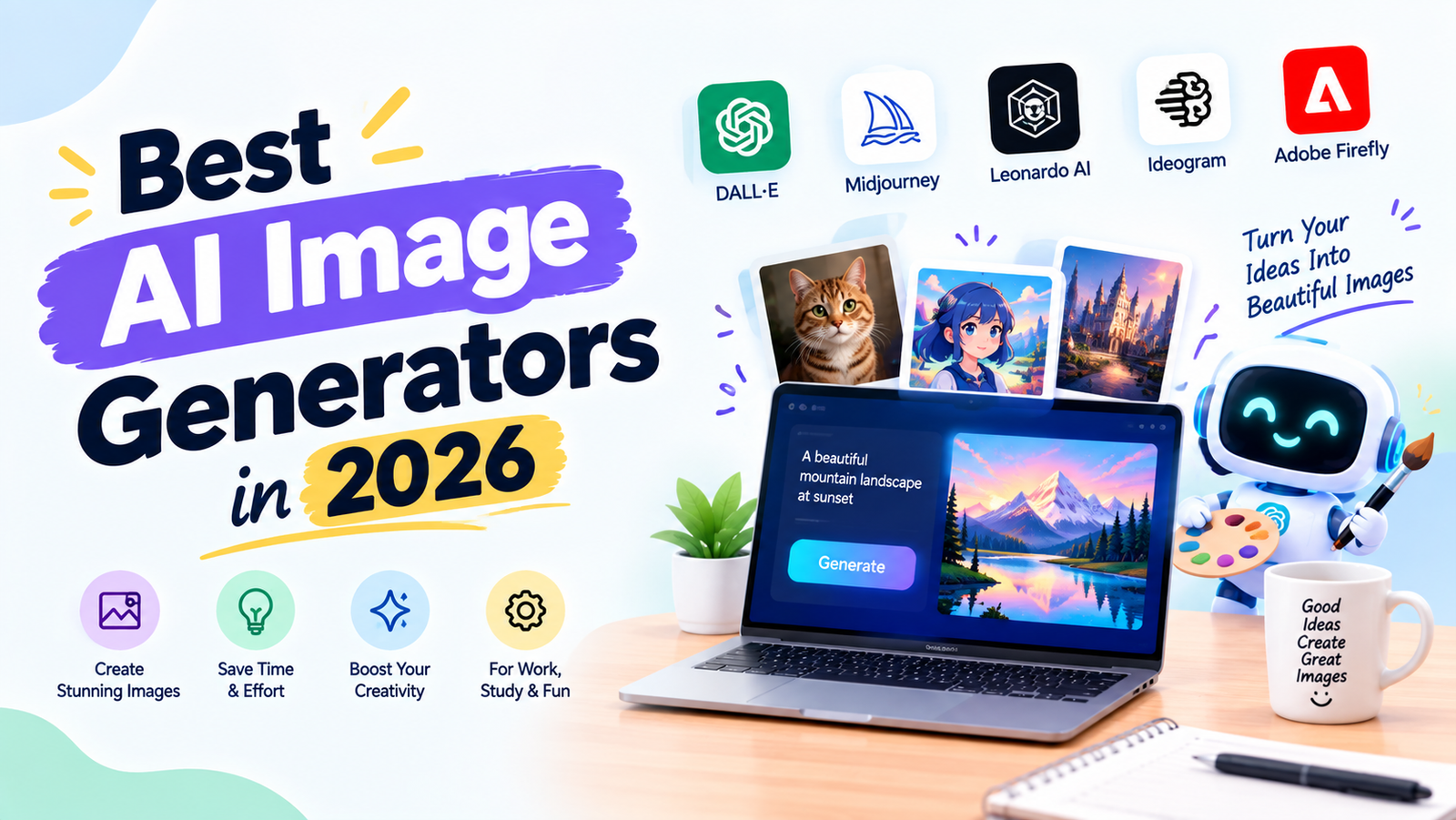
1. ChatGPT Images
ChatGPT’s image-generation capabilities are useful for people who want to create and edit images through a conversational interface.
OpenAI announced ChatGPT Images 2.5 in September 2026, describing improvements in detail, lighting, textures, reference-image preservation, editing reliability, and generation speed. OpenAI also introduced features such as sketch-based references, templates, and image comments for editing workflows.
This makes conversational image creation particularly interesting for users who don’t want to learn complicated image-generation controls.
What Can You Use It For?
ChatGPT image generation can be useful for:
- Blog graphics
- Social media visuals
- Concept art
- Marketing ideas
- Product concepts
- Illustrations
- Posters
- Creative experiments
- Image editing
Why Beginners May Like It
The biggest advantage is the conversational workflow.
Instead of trying to understand dozens of technical settings, you can describe what you want and refine the result through follow-up instructions.
For example:
“Make the background brighter.”
Then:
“Keep the person unchanged but replace the background with a modern office.”
This style of interaction can be convenient for beginners.
2. Adobe Firefly
Adobe Firefly is a broader creative AI platform rather than simply a single image generator.
Adobe describes Firefly as a creative AI studio that can generate and edit images, create videos, work with vector graphics, and provide creative workflows.
One notable feature is its multi-model approach.
Adobe’s current Firefly ecosystem provides access to models from Adobe and several partner companies. Its documented partner models include options from OpenAI, Google, Black Forest Labs, Ideogram, and Runway, among others.
Why Firefly Stands Out
Firefly can be particularly useful for people already working within Adobe’s creative ecosystem.
You can generate an image and continue editing it using other creative tools.
Adobe also emphasizes commercially safe Firefly models trained using licensed or public-domain content according to its stated approach.
Good For
- Professional creative workflows
- Marketing materials
- Image editing
- Concept development
- Adobe users
- Brand assets
- Creative experimentation
3. Midjourney
Midjourney is widely known for AI-generated artistic and highly stylized imagery.
It has attracted creators interested in:
- Concept art
- Fantasy images
- Cinematic scenes
- Character concepts
- Artistic compositions
- Creative illustrations
One reason people explore Midjourney is its strong emphasis on visual aesthetics.
However, the ideal tool depends on your specific workflow. A person creating artistic concepts may have different requirements from someone designing business documents or editing product photographs.
4. Google Image Generation Tools
Google’s AI ecosystem also provides image-generation capabilities through its Gemini-related models and services.
Current Adobe Firefly documentation lists Gemini 3 with Nano Banana Pro and Gemini 3.1 with Nano Banana 2 as partner image-generation models available within Firefly. These models can be used with text prompts and reference images, with multiple aspect-ratio options.
Google’s image-generation ecosystem can be particularly interesting for users already working with Gemini and other Google AI services.
Potential Uses
- Creative images
- Image editing
- Concept generation
- Social media graphics
- Visual experiments
- Reference-based generation
5. Ideogram
Ideogram is particularly relevant when text inside an image matters.
Traditional AI image generation has historically had difficulty producing accurate written text inside images.
Tools focused on typography and design can therefore be useful for:
- Posters
- Advertisements
- Social media graphics
- Logos and concepts
- Presentation visuals
- Typography experiments
When your image needs readable words, always inspect the generated result carefully before publishing.
6. FLUX
FLUX is another important name in the AI image-generation ecosystem.
Different FLUX models and implementations are available through various platforms.
Adobe’s current Firefly documentation lists several FLUX partner options, including FLUX1.1 Pro, FLUX1.1 Ultra, FLUX.2, FLUX Kontext MAX, and FLUX Kontext Pro.
FLUX-based workflows can be useful for creators who want access to different image-generation approaches and more advanced creative experimentation.
7. Runway Image Generation
Runway is known for generative video, but its ecosystem also includes image-generation capabilities.
Adobe currently lists Runway Gen-4 Image among the partner models available in Firefly.
This can be interesting for creators who work across both images and video and want a workflow that connects visual development with motion content.
AI Image Generator Comparison
The following table provides a practical way to think about different tools.
| Tool/Ecosystem | Particularly Useful For | Beginner Friendly | Creative Editing |
|---|---|---|---|
| ChatGPT Images | Conversational creation and editing | Yes | Strong |
| Adobe Firefly | Professional creative workflows | Yes | Strong |
| Midjourney | Artistic and stylized visuals | Moderate | Strong |
| Google/Gemini image tools | General image creation and editing | Yes | Strong |
| Ideogram | Text-focused graphics | Yes | Strong |
| FLUX | Advanced image experimentation | Moderate | Varies |
| Runway | Image and broader creative workflows | Moderate | Strong |
This is not a ranking. Different tools solve different problems, so the best option depends on your specific use case.
AI Image Generators for Different Needs
Instead of asking “Which AI image generator is best?”, a better question is:
“Which tool is best for what I want to create?”
For Beginners
A conversational AI image tool can be easier because you can describe your idea naturally.
For Professional Designers
A platform connected to professional editing software may provide a more complete workflow.
For Artistic Images
Creative-focused generators such as Midjourney may appeal to users looking for highly stylized visual results.
For Text in Images
Tools with strong typography capabilities can be more appropriate for posters, promotional graphics, and other designs containing substantial text.
For Multi-Model Workflows
Adobe Firefly is notable because it brings multiple image models into one creative environment.
Free vs Paid AI Image Generators
Many AI image services provide some form of free access, while more advanced features may require payment.
Before choosing a paid plan, check:
- Number of generations
- Image resolution
- Commercial-use terms
- Editing capabilities
- Available models
- Speed
- Watermarks
- Usage limits
- Storage
- API availability
- Export options
Free access can be enough for casual experimentation.
Professional creators may need paid access because they generate images more frequently or require additional features.
How to Write Better AI Image Prompts
The quality of your prompt can significantly affect the result.
A useful image prompt can include several elements.
1. Subject
Explain what should appear in the image.
Example:
“A young entrepreneur working at a modern desk.”
2. Environment
Describe the location.
“Inside a bright minimalist office.”
3. Lighting
Add lighting information.
“Soft morning sunlight coming through a large window.”
4. Composition
Explain how you want the image framed.
“Medium shot with the subject positioned slightly to the left.”
5. Style
Describe the visual direction.
“Clean professional photography.”
6. Aspect Ratio
If supported, specify the desired format.
For example:
“Vertical 9:16 composition.”
Example of a Basic Prompt
“A modern laptop on a desk.”
This is simple but leaves many details open.
A more detailed prompt could be:
“A modern silver laptop on a clean wooden desk inside a bright minimalist home office, soft morning sunlight, realistic photography, natural shadows, shallow depth of field, professional technology blog style, horizontal composition.”
The second prompt gives the model much more direction.
Use Reference Images When Available
Text is not always enough.
If a platform supports reference images, you can provide a visual example and explain what you want changed.
For example:
“Use this image as a reference for the composition but change the background to a modern office.”
Adobe’s current Firefly documentation describes reference-image workflows for partner models such as Gemini and GPT Image.
Reference images can be particularly useful when you need more control over composition, subject appearance, or visual style.
How Bloggers Can Use AI Image Generators
AI image generators can be useful for websites and blogs.
For example, a technology blog could create:
- Featured images
- Article illustrations
- Comparison graphics
- Concept visuals
- Infographics
- Social media graphics
Suppose your article is about artificial intelligence.
Instead of using the same generic stock image found on hundreds of websites, you could create a custom visual matching the article’s topic and branding.
However, generated images should support the article rather than simply exist for decoration.
AI Images for Social Media
Social media platforms are highly visual.
AI image generators can help create:
- Post graphics
- Story backgrounds
- Promotional visuals
- Quote graphics
- Educational illustrations
- Thumbnail concepts
- Campaign ideas
A useful workflow is:
Idea → Prompt → Generate → Edit → Add Branding → Review → Publish
Don’t forget to check text, logos, faces, hands, objects, and other important details before publishing.
AI Images for Businesses
Small businesses can use AI image generation during the planning and marketing stages.
For example, a business might create visual concepts for:
- Product packaging
- Website hero images
- Advertising ideas
- Social media campaigns
- Store displays
- Promotional materials
AI can be particularly useful before investing money in professional photography or design because it allows businesses to explore concepts first.
For final commercial campaigns, professional design and legal review may still be appropriate.
Important Things to Check Before Publishing AI Images
Never assume that an AI-generated image is automatically ready for publication.
Check the following:
Faces
Are facial features natural?
Hands
Are fingers and hand positions correct?
Text
Is every word spelled correctly?
Logos
Does the image contain unwanted or inaccurate logos?
Objects
Do objects look physically realistic?
Background
Are there strange artifacts?
Consistency
If you are creating multiple images for the same brand, do they maintain a consistent visual identity?
Copyright and Commercial Use
One of the most important questions is:
Can I use an AI-generated image commercially?
The answer depends on the specific platform, model, subscription, input material, output rules, and applicable law.
Do not assume that every AI-generated image has identical usage rights.
Before using an image commercially, review the provider’s current terms.
Adobe, for example, distinguishes its Firefly models and partner models and provides specific information about its commercially safe Firefly approach.
If you are creating images for a business, advertising campaign, client project, or product, keep records of the tool and plan you used and review the applicable licensing terms.
Privacy and AI Image Generation
Be careful when uploading personal or confidential images.
Before uploading a photograph, ask:
- Who owns the image?
- Does it contain another person’s face?
- Does it contain private information?
- How does the service handle uploaded images?
- Are the images retained?
- Can the service use uploaded material for training?
These questions become particularly important when working with client photos, private documents, unreleased products, or confidential business materials.
Common Mistakes When Using AI Image Generators
Mistake 1: Using Extremely Short Prompts
A vague prompt may produce an image that does not match your vision.
Mistake 2: Adding Too Many Contradictory Instructions
If your prompt asks for conflicting styles or compositions, the output may become unpredictable.
Mistake 3: Not Checking Text
AI-generated text can still contain errors.
Mistake 4: Publishing the First Result
Generate multiple variations when possible and compare them.
Mistake 5: Ignoring Usage Rights
Always understand the applicable terms before using generated images commercially.
Mistake 6: Making Everything Look Artificial
If your goal is realism, ask for natural lighting, realistic textures, authentic environments, and believable proportions.
A Simple AI Image Creation Workflow
For beginners, this workflow is easy to follow.
Step 1: Define the Goal
What are you creating the image for?
Step 2: Describe the Subject
Explain what should appear.
Step 3: Describe the Environment
Add the setting.
Step 4: Choose the Style
Specify realistic photography, illustration, 3D art, editorial design, or another visual direction.
Step 5: Choose the Composition
Mention portrait, landscape, square, or another supported format.
Step 6: Generate Variations
Create several options when the platform allows it.
Step 7: Refine
Ask the AI to change specific details.
Step 8: Inspect Carefully
Look for errors and artifacts.
Step 9: Edit
Use an image editor if additional corrections are needed.
Step 10: Publish
Use the final image only after checking quality and usage rights.
Are AI Image Generators Replacing Designers?
AI image generators can automate certain parts of image creation, but that does not mean professional design has become unnecessary.
A designer contributes much more than simply producing pixels.
Professional design can involve:
- Brand strategy
- Composition
- Typography
- Color decisions
- User experience
- Creative direction
- Client communication
- Consistency
- Production knowledge
AI can accelerate parts of this process, but human creative direction remains valuable.
A useful way to think about AI is:
AI generates possibilities; humans decide what is useful.
The Future of AI Image Generation
AI image generation is developing quickly.
Future tools are likely to continue improving in areas such as:
- Image quality
- Editing precision
- Character consistency
- Text rendering
- Reference-image control
- Video integration
- Creative workflows
- Multi-step editing
- Resolution
- Speed
The trend is also moving beyond simple “text-to-image” generation.
Modern creative platforms increasingly combine image generation with editing, video, design, and other creative tools. Adobe’s Firefly ecosystem is one example of this broader direction.
This means the future may involve fewer separate tools and more integrated creative workflows.
Frequently Asked Questions
What is the best AI image generator in 2026?
There is no single best option for every user. The right tool depends on whether you need realistic images, artistic visuals, image editing, text-heavy graphics, professional design workflows, or multi-model access.
Can AI generate realistic photos?
Yes. Modern AI image models can generate highly realistic-looking images, although results can still contain visual errors and should be reviewed carefully.
Can AI image generators edit existing photos?
Many modern systems support image editing. Depending on the tool, you may be able to add, remove, replace, or modify parts of an image.
Are AI image generators free?
Some offer free access or limited generations, while advanced features may require a paid subscription or credits.
Can I use AI-generated images on my website?
Potentially, but you should review the specific provider’s terms, commercial-use rules, and any applicable copyright or licensing requirements.
Which AI image generator is easiest for beginners?
Conversational image-generation tools can be particularly accessible because users can describe what they want using normal language rather than learning complex design controls.
Can AI create images with text?
Yes, some modern image models are designed to handle text within images better than earlier systems. However, you should still carefully check spelling and layout.
Can AI generate images from reference photos?
Yes. Several current systems support reference-image workflows, although the exact controls vary by platform and model.
Are AI-generated images always copyright-free?
No. You should not automatically assume that an AI-generated image is copyright-free or unrestricted. Rights can depend on the tool, inputs, terms, jurisdiction, and circumstances.
Final Thoughts
AI image generation has become one of the most accessible applications of generative artificial intelligence.
In 2026, users can choose from conversational image generators, artistic platforms, professional creative studios, typography-focused tools, and systems that bring multiple AI models together.
The most important thing is not simply choosing a popular tool.
Instead, identify what you actually need.
If you want conversational creation and editing, an AI assistant with image-generation capabilities may be convenient. If you need a broader professional workflow, Adobe Firefly offers image generation, editing, video, creative boards, and access to multiple partner models.
If you want artistic experimentation, platforms such as Midjourney may be worth exploring. If your project depends heavily on text inside images, typography-focused tools can be useful. And if you want to experiment with multiple models, a multi-model creative platform can simplify the process.
The best results usually come from combining good prompts, careful selection, human creativity, editing, and quality control.
AI can create the starting point, but your ideas and decisions are what turn that starting point into useful visual content.





Leave a Reply